 KitGuru KitGuru.net – Tech News | Hardware News | Hardware Reviews | IOS | Mobile | Gaming | Graphics Cards


In the world of extreme headphone hifi, the Sennheiser HD800 have earned legendary status. Since their launch seven years ago the HD800 have not only managed to hold their own against cutting edge planar phones but in relative terms they have proved somewhat of a bargain. Sennheiser have released a new version with an ‘S' moniker – featuring key acoustic improvements and an additional £250 balanced cable bundled at no extra cost.
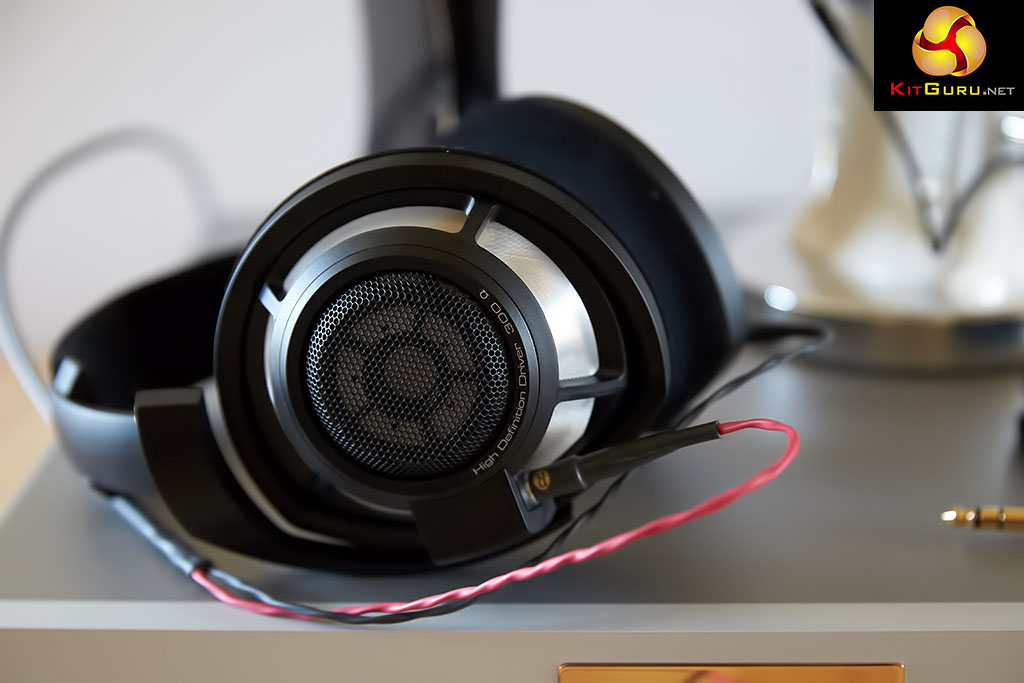
Regular readers of KitGuru will know that I have reviewed many high end headphones in the last year, including the HiFi Man HE1000 (£2,199), Stax 009 (£3,695), Audeze LCD4 (£3,299) and Abyss 1266 (£4,254). Yes, even with 2 grand in your wallet you wont be able to buy any of these headphones.
On a more positive note, you can pick up the original Sennheiser HD800 headphones at a relatively modest £1,099 from good local dealers in the UK. The new HD800 S are priced at £1,199 which highlights that Sennheiser are determined to undercut all of their competitors in the audiophile headphone market.
The Sennheiser HD 800 S ship with an additional complimentary 4 pin XLR balanced cable, as well as a standard 1/4″ single ended cable. This XLR cable could previously only be bought separately for an extra £250. If we look at the XLR cable as a necessary extra, then the HD800 S will actually save you £150.
It is clear that Sennheiser are not trying to fleece their fans, but let us find out what exactly what has changed.
Features
- Further optimised reference class in wired headphones
- Open, circum-aural dynamic stereo headphones
- Enhanced sound reproduction achieved through absorber technology
- Additional cable with balanced XLR4 connector
- High-class matt black metal parts
- Natural hearing experience – realistic and natural sound field with minimal resonance
- Biggest transducers ever used in headphones including new innovative dynamic transducer design
- Uncovered earcups for enhanced acoustics
- Handcrafted ear pads, made of high-quality microfiber fabric
- Metal headband with an inner damping element
- Specially tuned balanced, impedance matching cable with low capacitance
- Special high precision headphone connectors
- 2 year warranty
I used the Sennheiser HD800 for many years and while I rate them highly as a studio headphone with the ability to extract insane levels of detail – they have never been one of my favourite headphones. I always found them a little too analytical for my tastes.
This was a shame considering their extreme levels of comfort, articulate phrasing, and glorious Sony R10-esque sound staging. My only real issue with the headphones was a slight treble accentuation which could make listening to music for many hours slightly fatiguing. I ended up giving them to my brother who has been using them heavily for 4 years. Credit to the Sennheiser team for the build quality, they still look brand new.
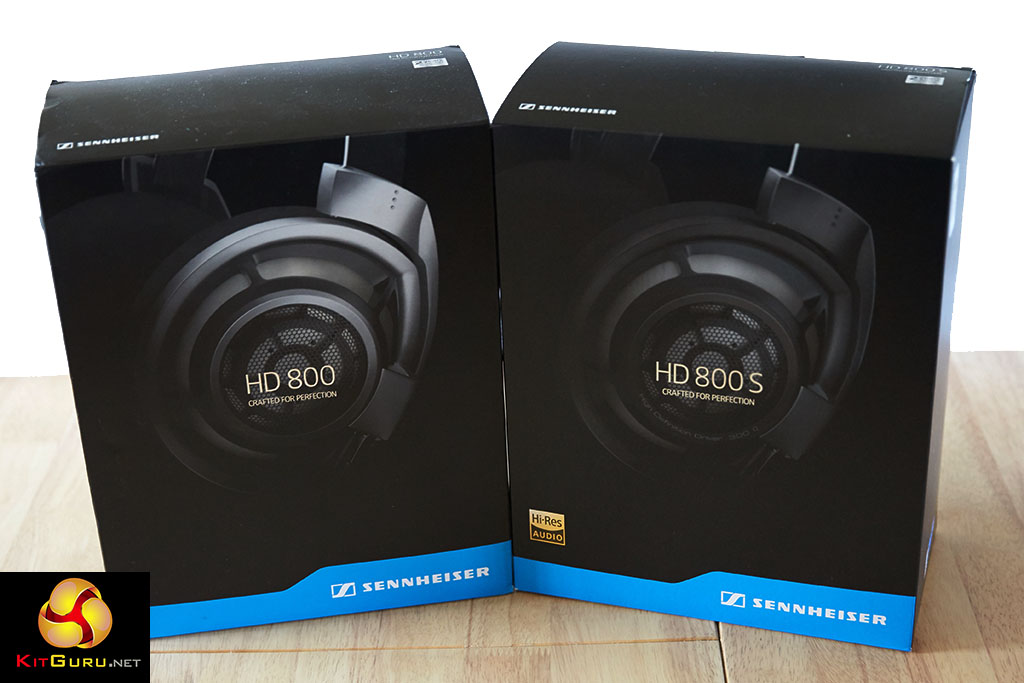
Sennheiser sent me a brand new HD800 and HD800 S along with their excellent HDVD800 amplifier. As the image above shows, the box artwork is almost identical.
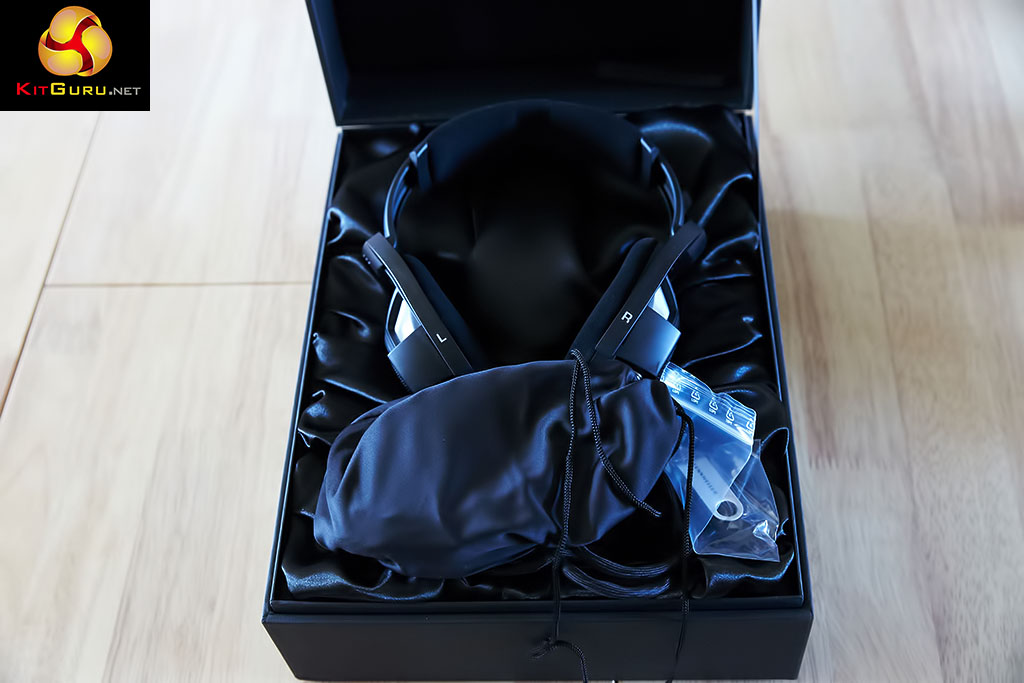
The Sennheiser HD800 are securely boxed with a user manual. Inside are the headphones, as well as a USB drive (with technical test data from the headphones), a 1/4″ single ended cable, and a little felt pouch. They also include a little microfibre cleaning cloth.
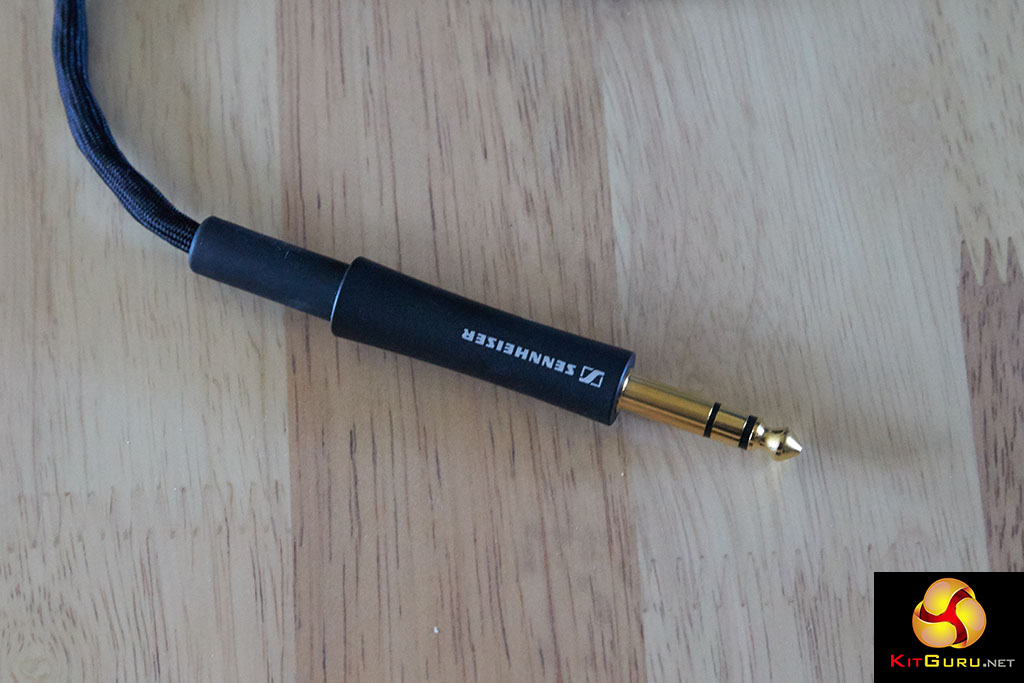
The Sennheiser 1/4″ cable is soft and flexible, gold plated, with the brand name clearly printed on the adapter.

The XLR 4 pin balanced cable is supplied inside a luxurious soft felt bag, shown above.
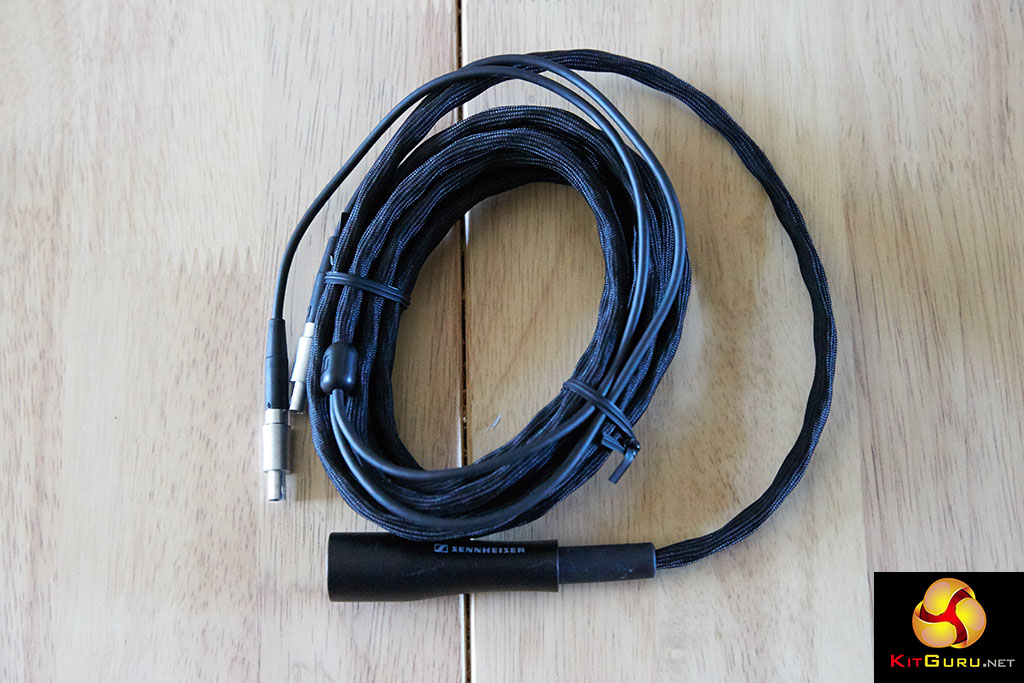
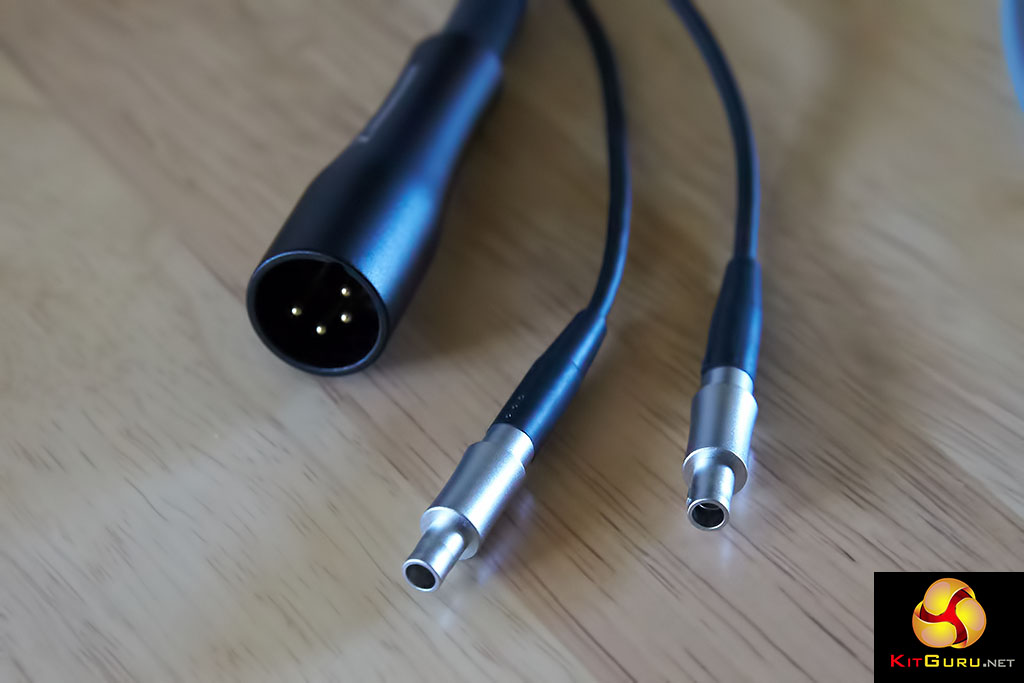
The earlier version of this XLR cable (in silver to match the HD800) was only available as an optional £250 extra, so I was very surprised to see that Sennheiser are now bundling a black version with the HD 800 S.
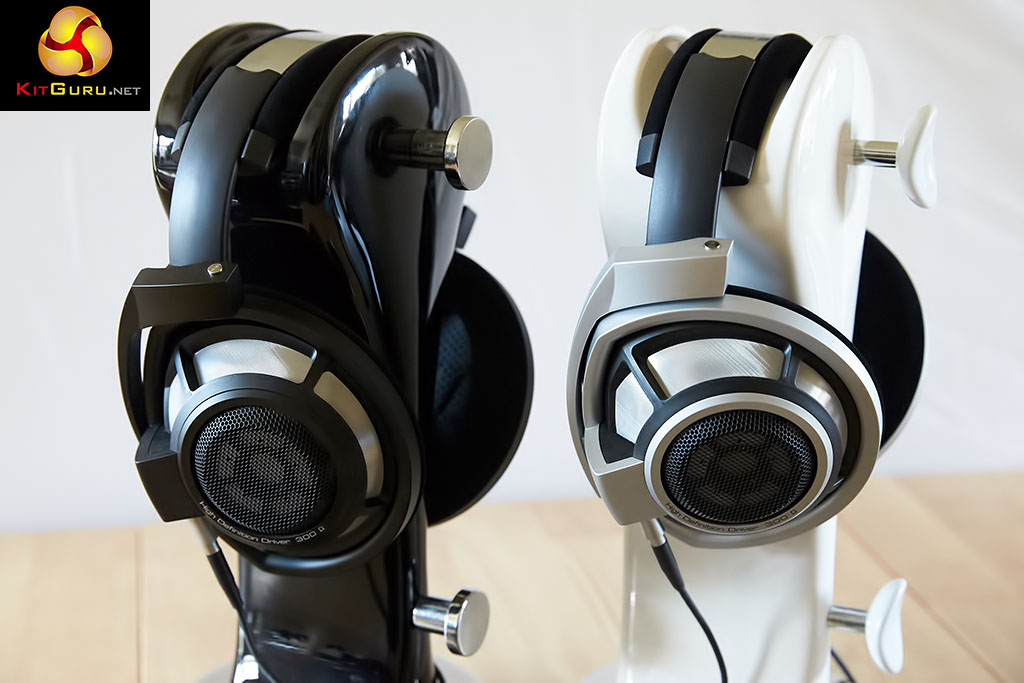
The image above shows the Sennheiser HD 800 S (left) and the original Sennheiser HD 800 (right). The headphones are almost identically styled, although the new S revision is ‘black', rather than silver. It is worth pointing out that the HD800 is one of the most comfortable headphones you can buy, with a truly exceptional headband adjustment system.
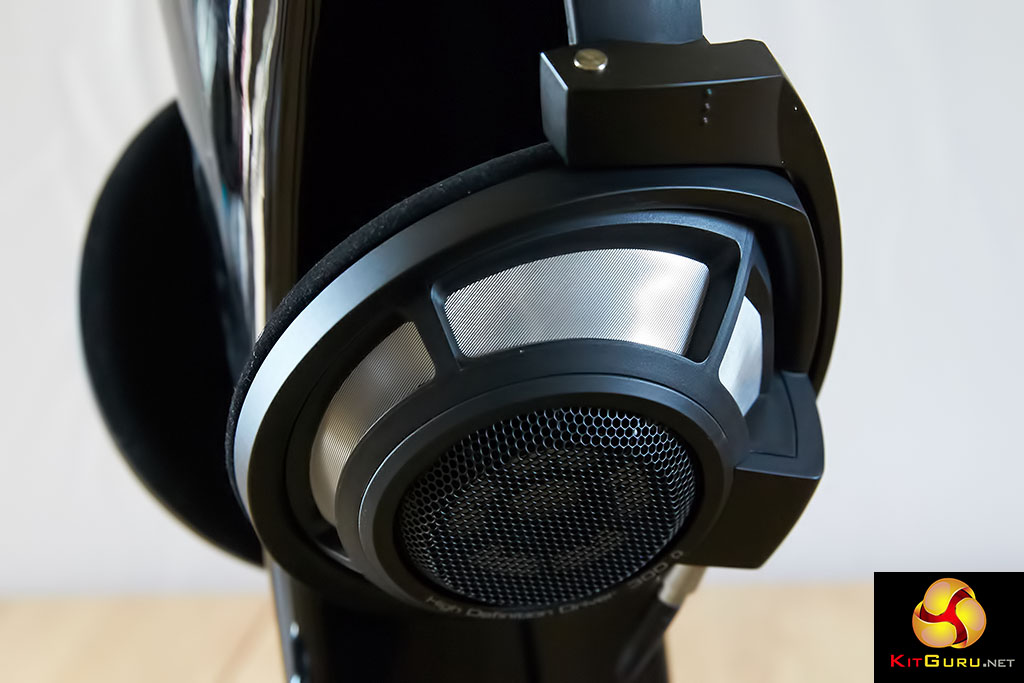
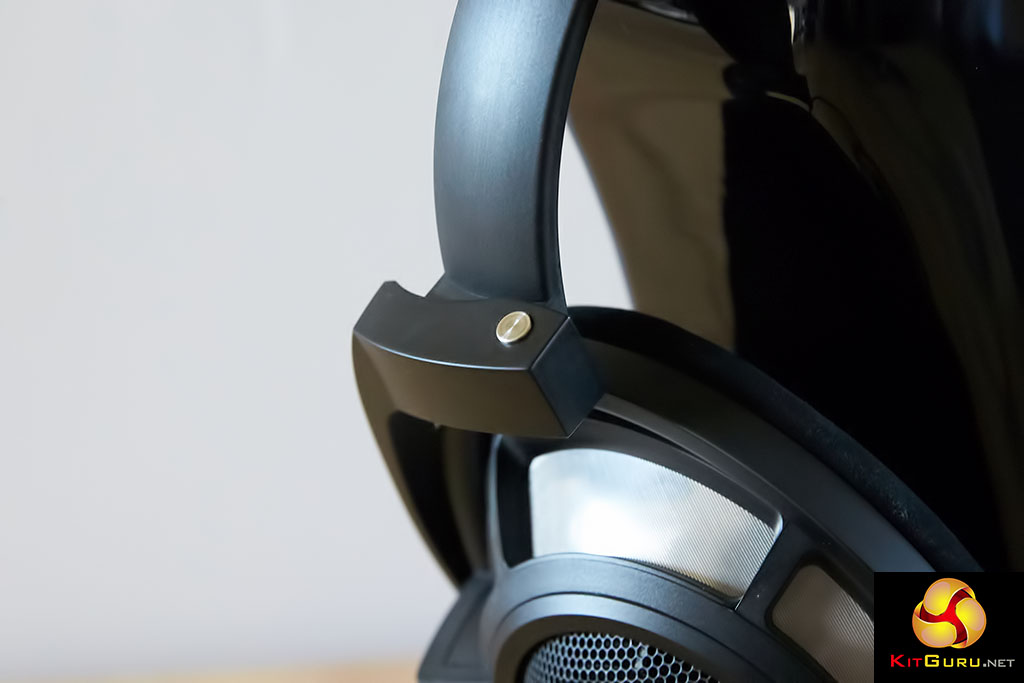
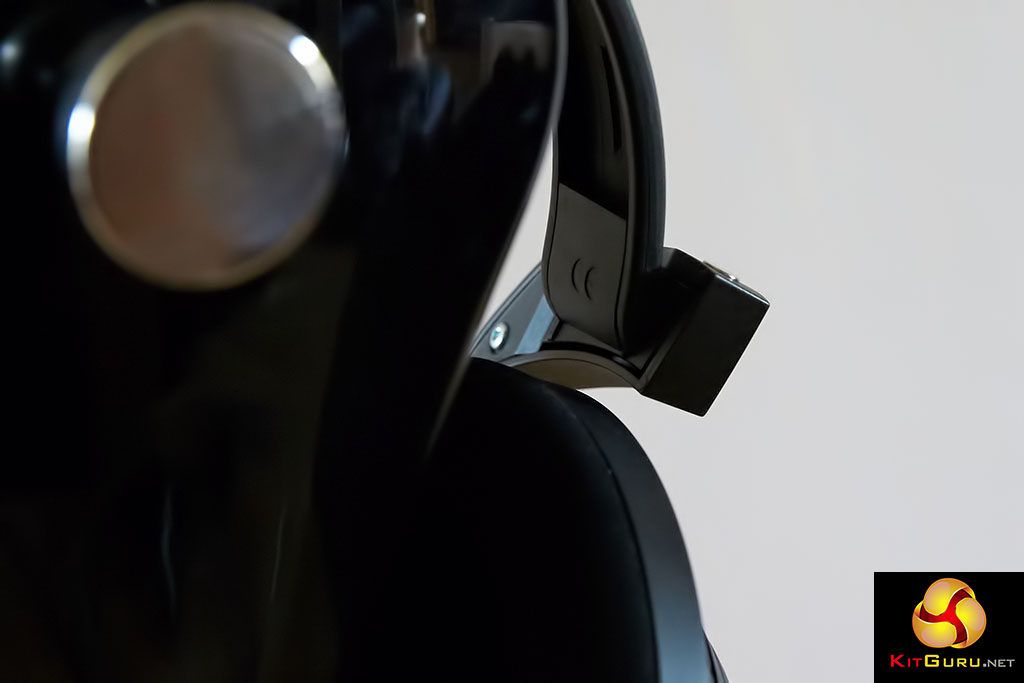
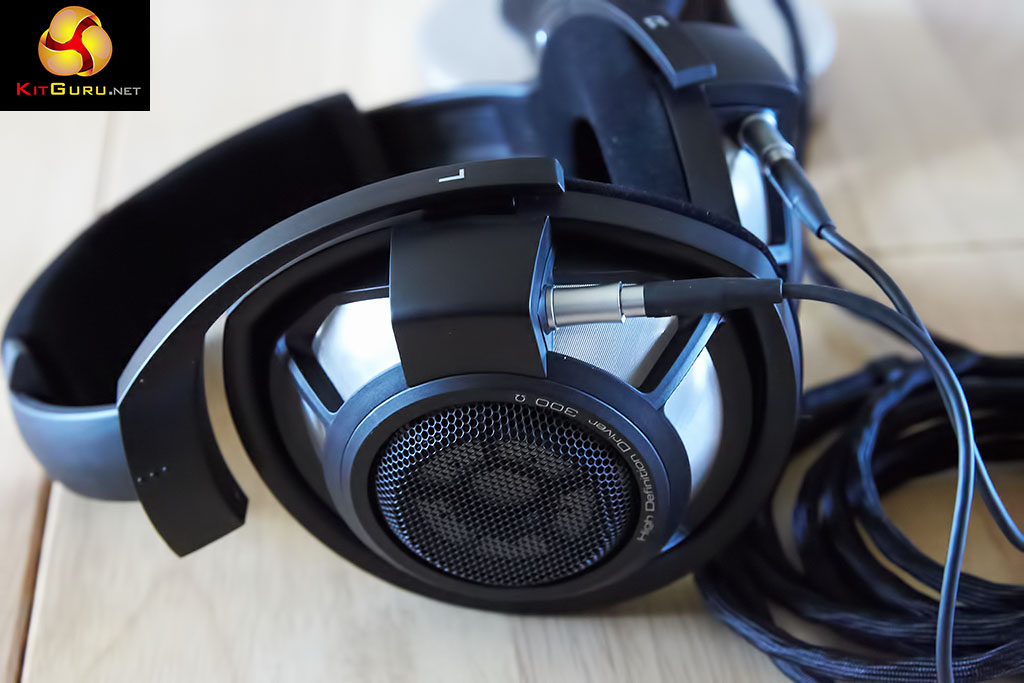
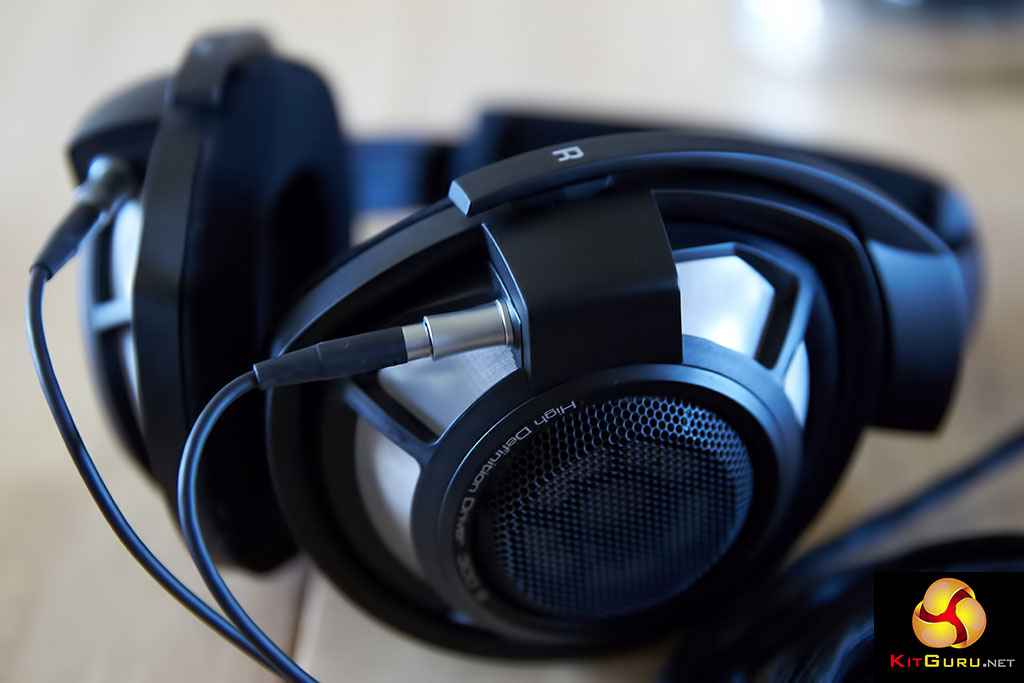
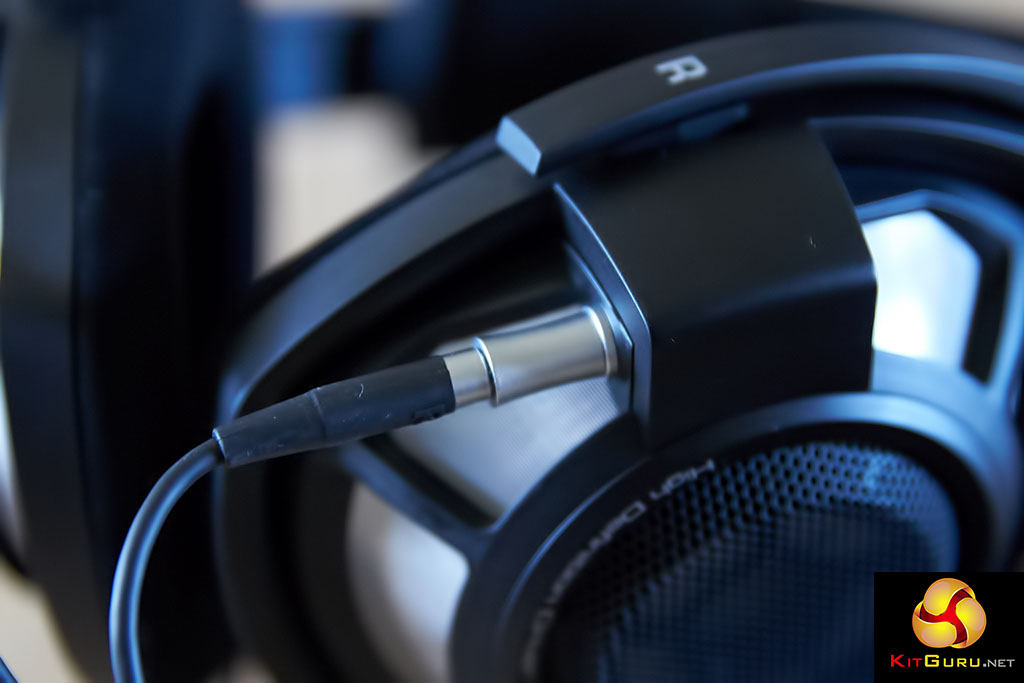
Attention to detail throughout is stellar although the audience who prefer old fashioned radio operator style headphones (think Grado) may be alienated by the hi-tech robotic appearance. The HD800 has always looked futuristic and it makes sense that Sennheiser didn't radically change what was always a fantastic headphone design. The HD800 S weigh only 330grams meaning that they remain comfortable throughout longer listening sessions – something I can't say about the latest superweight Audeze LCD4 which place a lot of strain on the head and neck.
The HD800 S headphones are completely open, so you are able to hear anyone close by, and they will be able to ‘enjoy' the music you are listening to, without much effort. They are not ideal for an office environment or when using public transport unless you want to get under the skin of everyone you meet.
The HD800 S earcups are made from high attenuation plastic which is used in aviation engineering. They are designed to ensure that sound waves are directed to each ear at an angle to create an excellent soundstage.
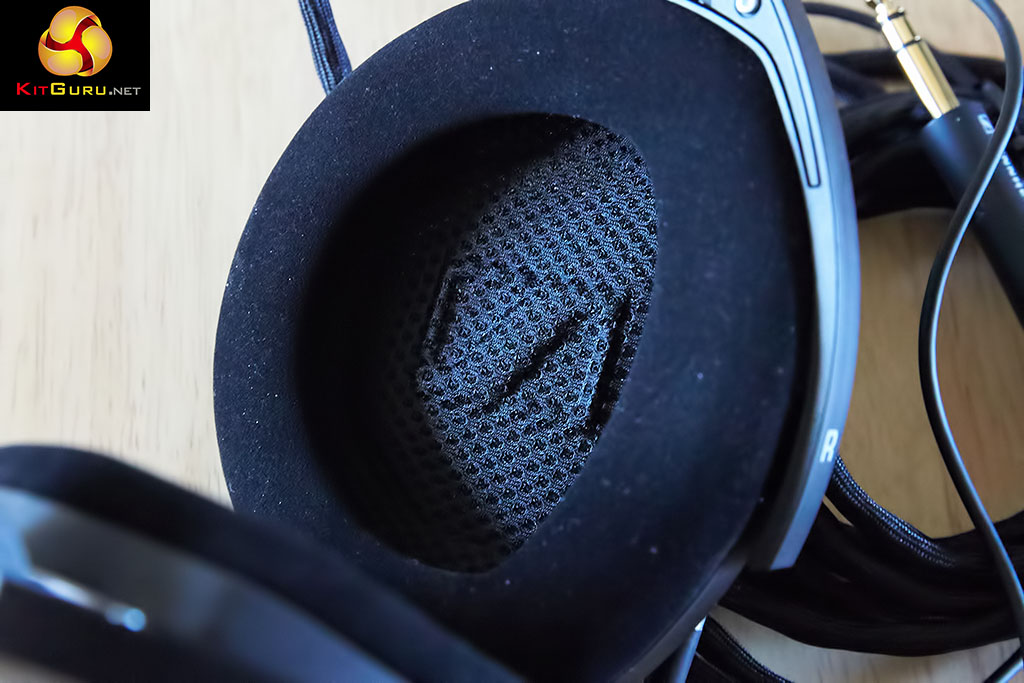
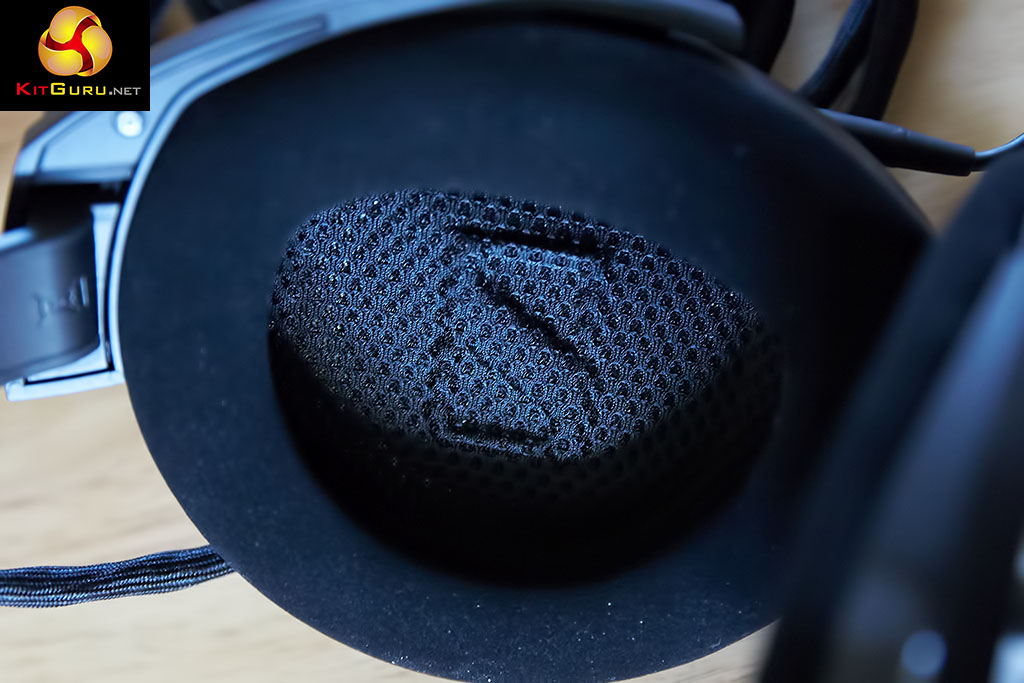
The pads are removable so they can be cleaned or replaced easily enough. They are large enough to envelope the whole ear (even my big lobes are perfectly encased) and are topped with Alcantara, a lovely suede style fabric that is water resistant, long lasting and very comfortable against the skin.
The 56mm transducer and patented ring design diaphragm deliver a frequency response ranging from 6hz to 51kHz with a total harmonic distortion of 0.02 percent. They are rated at 300ohm.
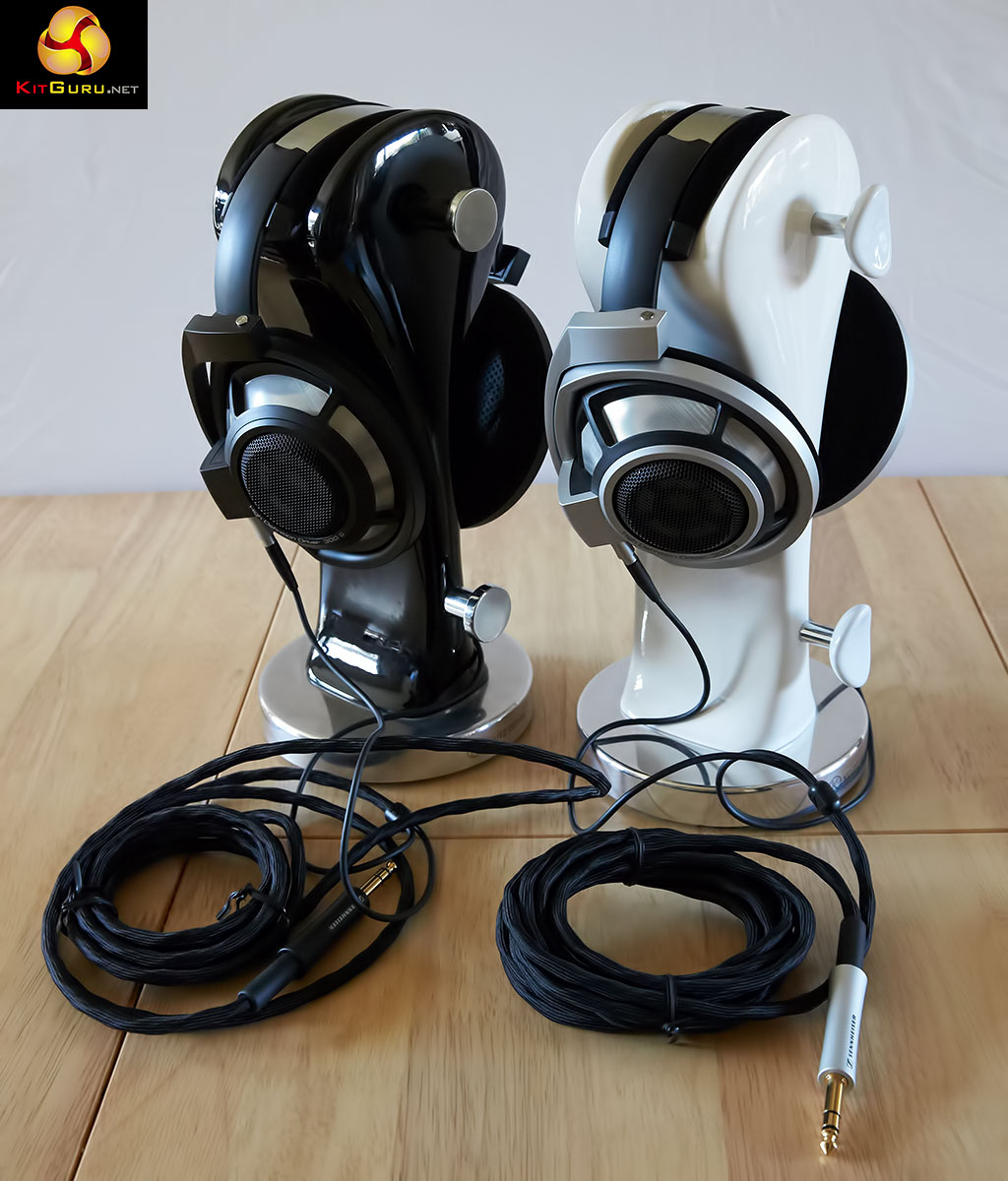
When Sennheiser were designing the new HD800 S they aimed to address the major concern that I and other people had with the original HD 800. They wanted to tame the somewhat aggressively detailed sound characteristics.
Achieving this without ruining the overall sound signature of the flagship headphone was achieved by adopting absorber technology first seen in the Sennheiser IE 800 earphones. The incorporation of absorber technology helped to smooth out frequency peaks while maintaining the same levels of detail throughout the audio curve. Medium and low frequencies ranges have been optimised further over the original design.
In their own words ‘The enhanced sound reproduction of the HD 800 S is achieved through the addition of the innovative absorber technology that was pioneered in the Sennheiser IE 800 – a breakthrough that preserved the audibility of very high frequency sounds by eliminating a phenomenon known as the “masking effect”, where the human hear struggles to hear frequencies of sound when lower frequencies of a higher volume occur at the same time. By absorbing the energy of the resonance, Sennheiser’s patented absorber technology prevents any unwanted peaks and allows all frequency components – even the finest nuances – in the music material to become audible.'
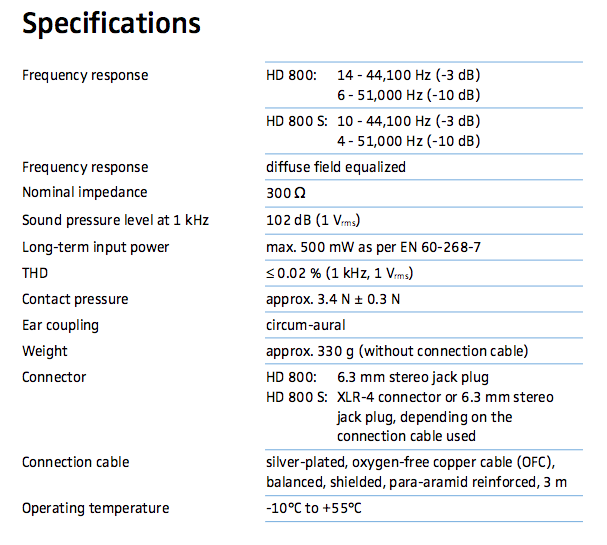
If we look at the official specifications of the HD800 and HD800 S we can see that the changes in design have enhanced the frequency response in the lower frequencies.
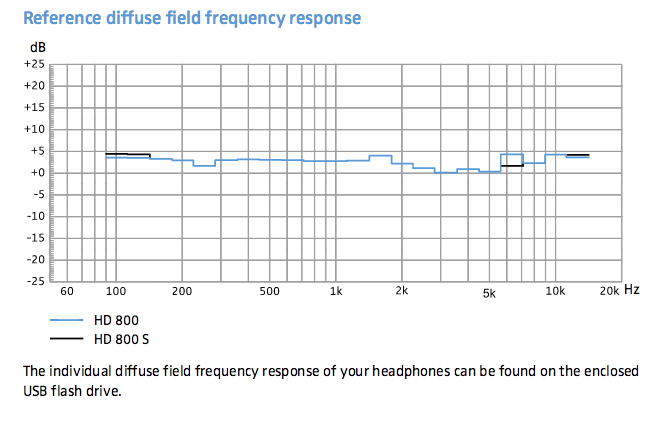
The frequency response graph highlights HD800 S design changes, with the specific focus on enhancing lower frequencies between 100 and 200hz while smoothing out the peaks in the upper frequency range between 5k and 7k.
I dedicated a lot of my spare time over the last two weeks listening to the HD800 S and HD800 headphones before I started to write this editorial. Sennheiser have been kind enough to send me their high end £1,500 HDVD 800 amplifier for audio analysis.
I had already used this amplifier extensively for a couple of months in 2015 but it never truly won me over, even though Sennheiser claim it a perfect match for their HD800 series.
Not to say it is a bad amplifier, far from it, but I always felt it suffered from a little dynamical restriction. Plenty of people disagree with me, but I can only base my opinions on what I hear. I won't be using the HDVD 800 for any tests today.
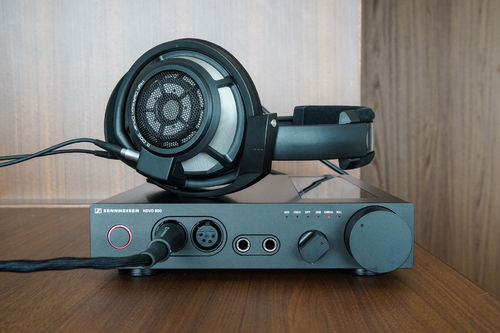
(image above courtesy of Jude at head-fi.org).
My contacts close to Sennheiser have informed me that the company are releasing a new updated, ‘black' version of this amplifier later in the year, around September. One to watch out for.
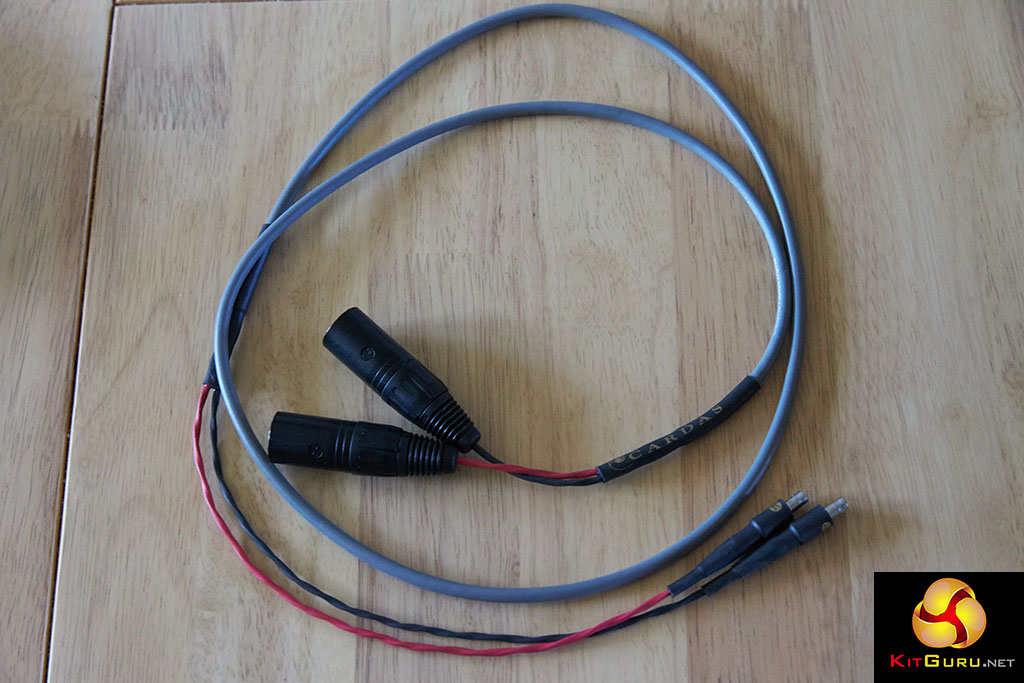
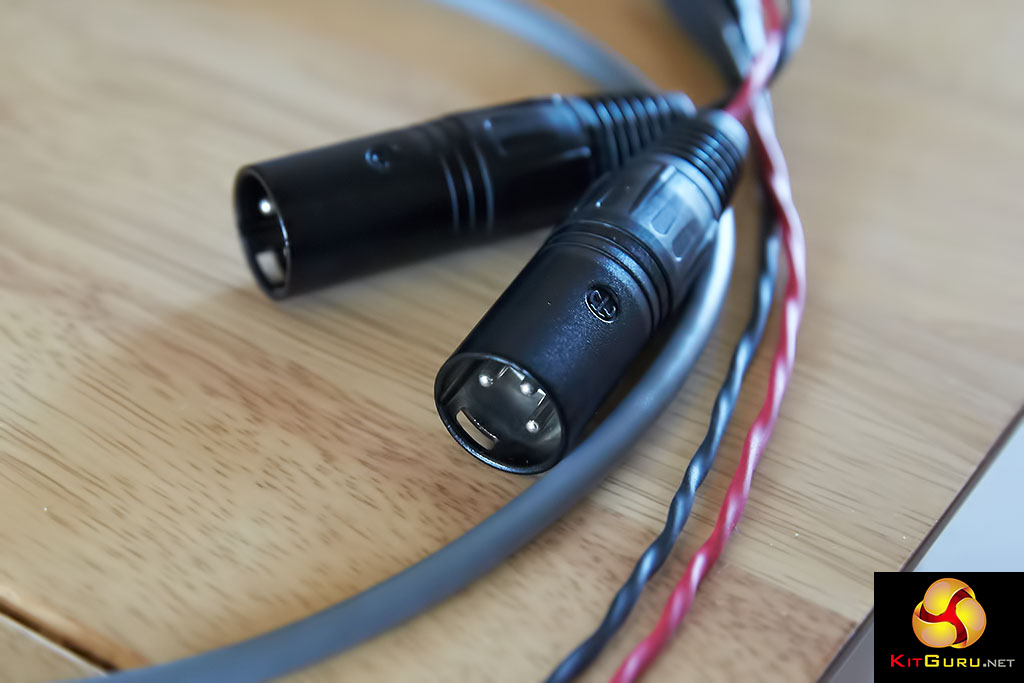
I tested both HD800 and HD800 S with their stock 1/4″ inch single ended cables and with a Cardas 2x 3 pin XLR cable, modestly priced at £250. While Sennheiser may have changed their single ended cable over the years, at least I knew the Cardas balanced cable would maintain a level playing field between both.
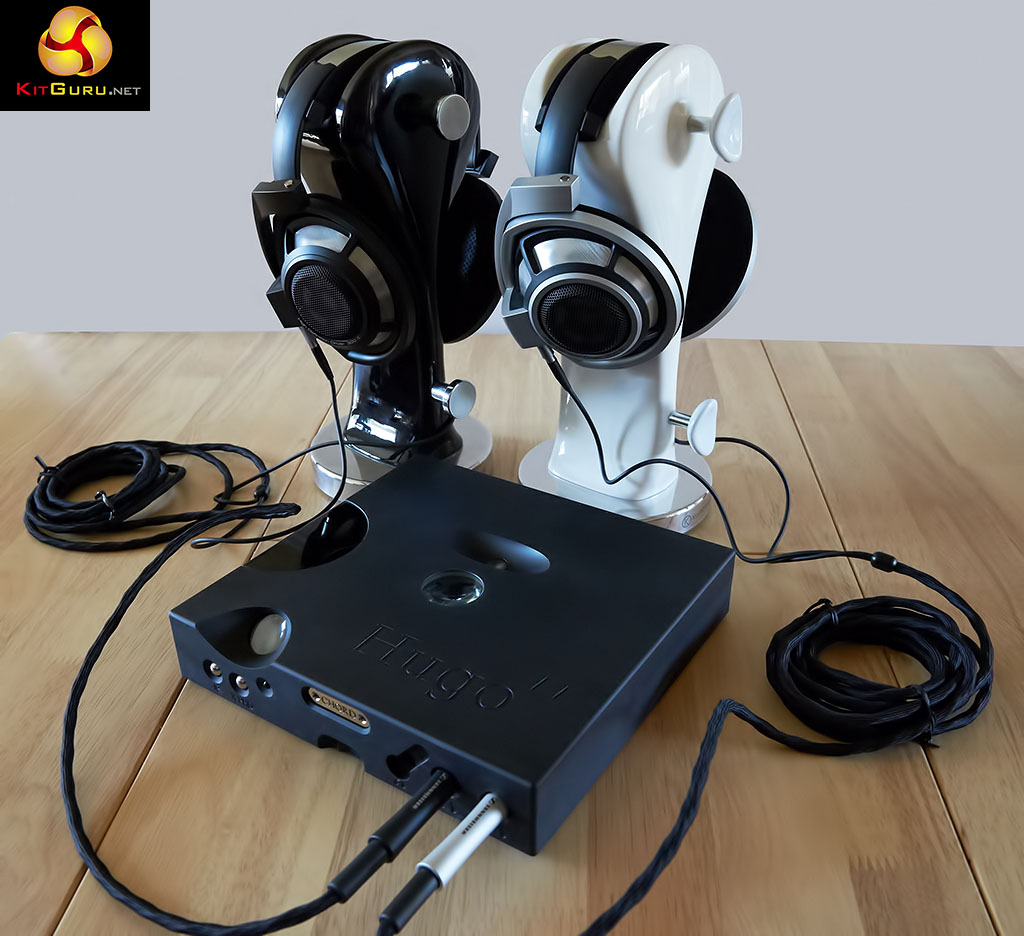
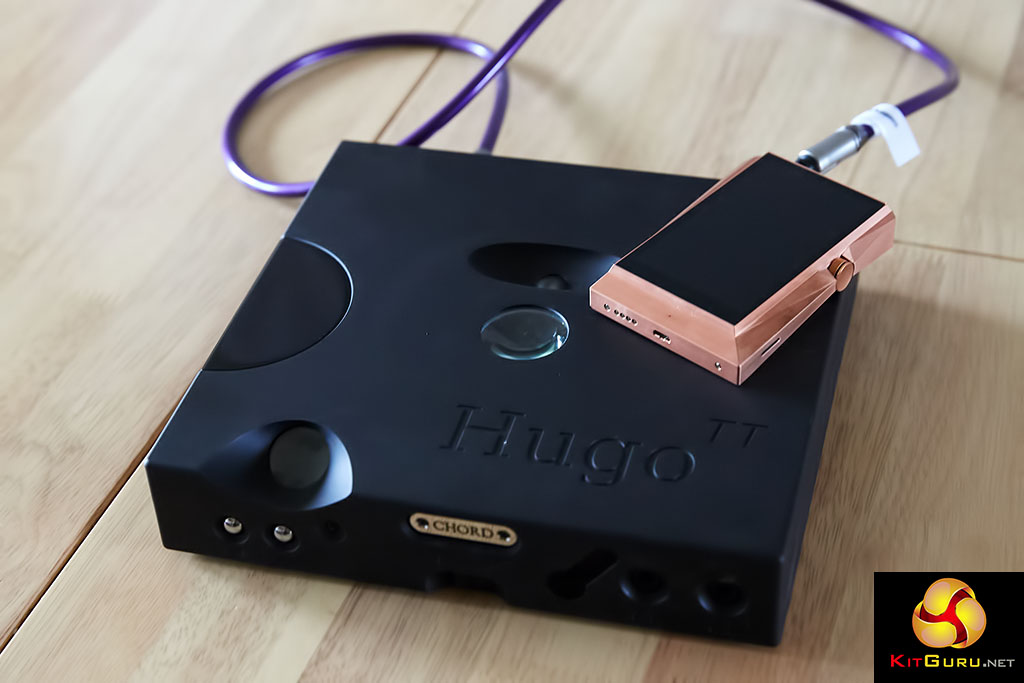
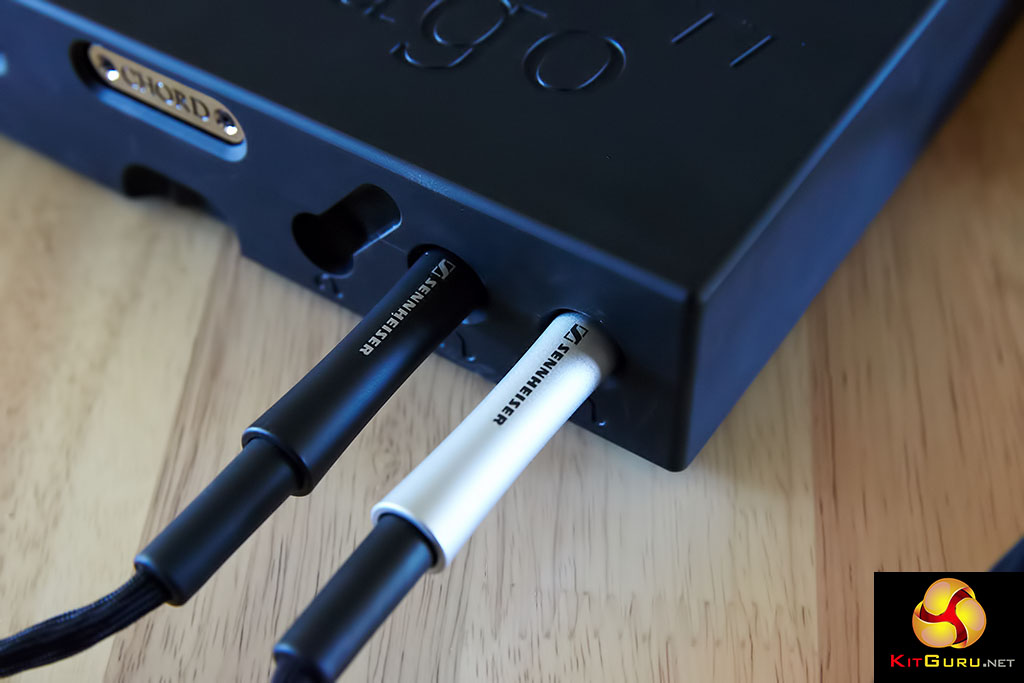
One of my favourite amplifiers is the £2,995 Chord Hugo TT, a product that doesn't often leave my side. This is the ‘Table Top' version of their ever popular Hugo. I wanted to test single ended performance first with the cables Sennheiser include in the box. I used the limited edition Astell & Kern AK380 Copper Edition as the source player with a variety of 24 bit FLAC files from the likes of The Eagles, Otis Redding, Stone Sour, Kate Bush, Diana Krall, Ella Fitzgerald, Nate King Col, Iron Maiden and Frank Sinatra (to name a few).
The Hugo TT is substantially larger than the older unit which focused on portability. Many people were actually using the Hugo as a main part of their home hifi system, which is how the Hugo TT came to fruition. One of the major problems with the original Hugo was that the ports were very closely packed and some exotic cables just wouldn’t fit into the ports.
Chord don’t use standardised circuit design. They use their own FPGA (Field Programmable Gate Array) rather than widely available DAC ICs from companies such as Wolfson or Burr Brown.
Technically the TT has the same audio circuitry as the smaller Hugo. The power supply is the main difference between the units. The TT has double the capacity and incorporates super capacitors to improve battery life and performance.
While the Hugo TT can be used as a portable device, it is not really meant to be used as such. The battery pack and supercapacitor implementation is in place to isolate the audio circuitry from mains noise.
The TT has two USB-B inputs, with one offering support for 32 bit 384 kHz PCM data streams and DSD in single and double speed. The other is SD, limited to 16 bit/48Khz signals. Optical and coax inputs are also supported. Coax has a maximum support of 24 bit 384kHz and optical 24 bit 192Khz. There is also full support for aptX Bluetooth.
There are three headphone outputs, two 6.3mm and a single 3.5mm. The TT can be easily connected to a hifi system with both single ended and balanced XLR output connectors at the rear. This means it can also perform preamp duties. Black and silver options are available.
The HD800 and HD 800 S both perform very well with the Chord Hugo TT although the standard 1/4″ cable that Sennheiser supply with the headphones could be better. I can remember the first time I used a high grade CARDAS cable with the HD800 many years ago – bass response was noticeably better and I was amazed that a cable could make such a difference. This is not always the case.
It is immediately obvious how Sennheiser have tweaked the audio characteristics of the HD 800 S. The treble frequencies in the curve are reduced, smoothed off with a softer edge to make music more enjoyable, especially if you plan on listening for a few hours at a time. When my ears adjusted, it was apparent that the new headphone was still resolving the same amount of fine detail, but it was being presented to the listener (me) in a slightly less aggressive manner.
By using the new dampening materials there is a slight reduction in high frequency micro detail when switching from HD800 to HD800 S headphones. While many people I know in headfi circles love this characteristic it is the one area that the HD800 came under criticism over the years. I have to say I was one of the dissenting audience who had a difficult time living with the HD800 for a long period of time. Even with high grade tube/valve amplifiers the issue was apparent.
The original HD800 had a tendency to bombard the senses with a little ‘too much' information at times. I would say that the HD 800 S sounded more natural and organic especially when listening to female vocal and finely miked acoustic guitar.
I put myself to the test and placed a blindfold over my eyes (I don't keep blindfolds in my house, so I used a scarf instead). My friend then placed either the HD800 or HD800 S on my head (I didn't know which) and she played a Diana Krall track ‘Temptation' from the album ‘Girl In The Other Room' via the headphones.
I was always able to correctly identify the headphone on my head just by listening to the music. It was pretty easy to tell by the bass response at the start of the track and also by Diana's vocal tone when she started to sing shortly after the track started. The HD800S has a slightly warmer edge to the proceedings, while maintaining the high levels of detail. I use the term ‘warmer' to signify a more realistic, life like reproduction rather than a simple colouring to the signature.
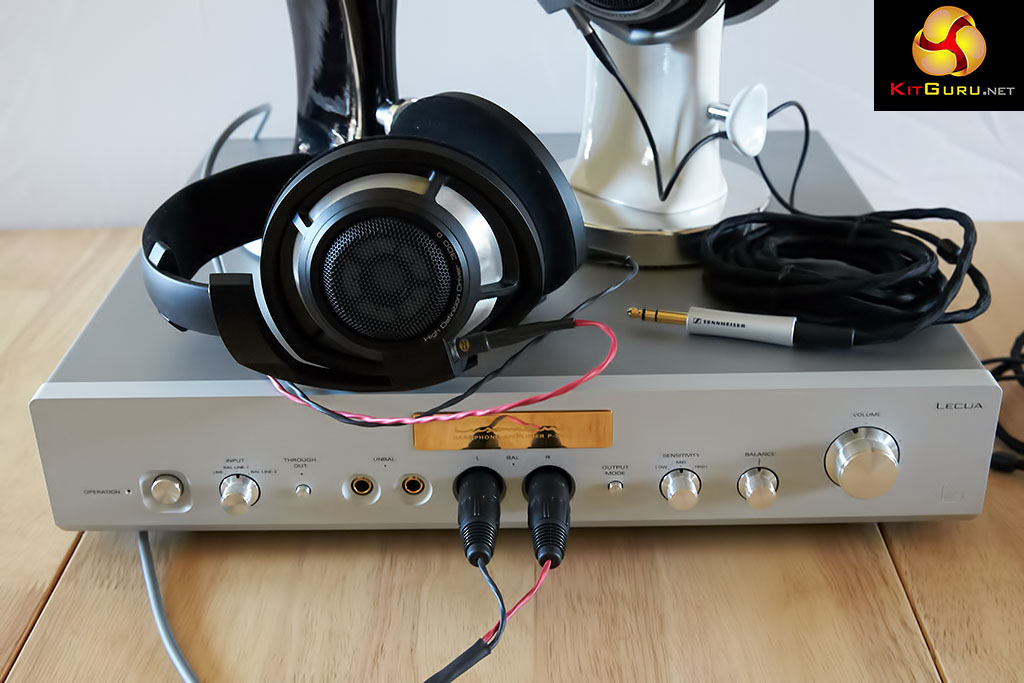
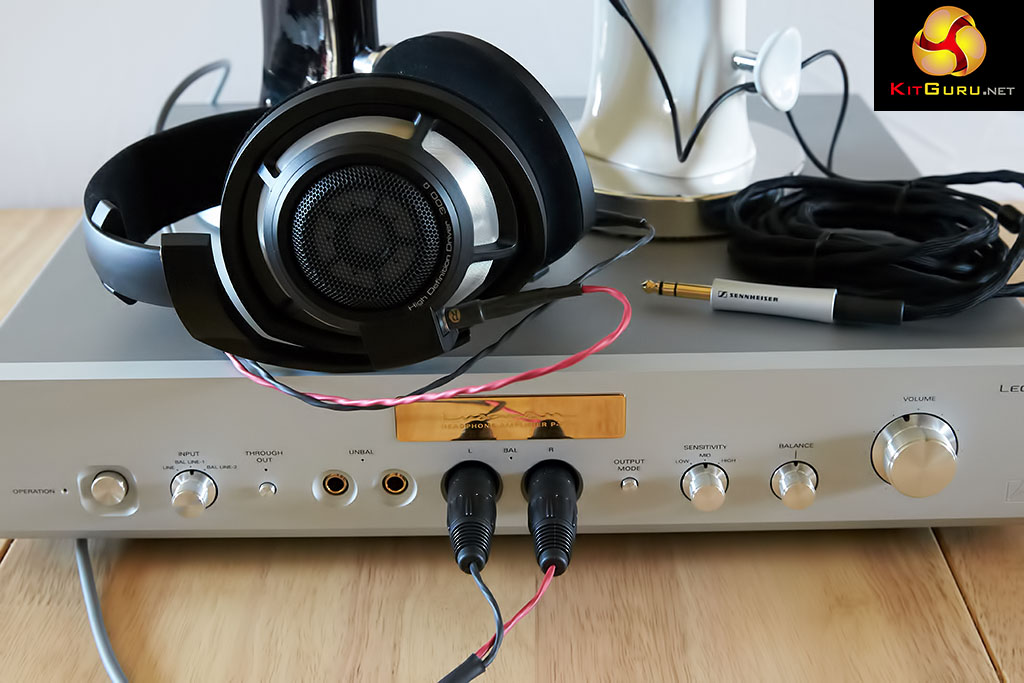
The Luxman P700 U Reference headphone amplifier is one of my favourites, priced at £3,000. It is such a refined amplifier that it can completely bathe the listener in a warm glow of euphoria. It is very neutral in presentation and it has a tendency to tame harsh sounding headphones with its sophisticated, lush, addictive presentation. It is actually one of the only amplifiers I have used that can help smooth out the slightly accentuated treble of the older HD800 headphone. I used the CARDAS balanced XLR (2x3pin) cable with both headphones to come to my conclusions.
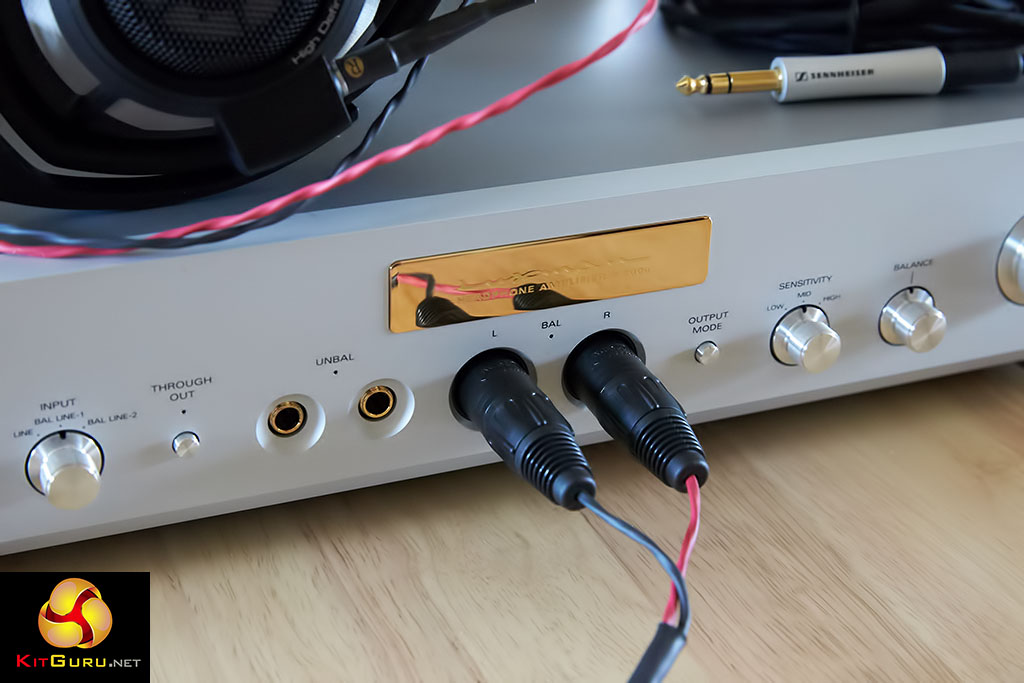
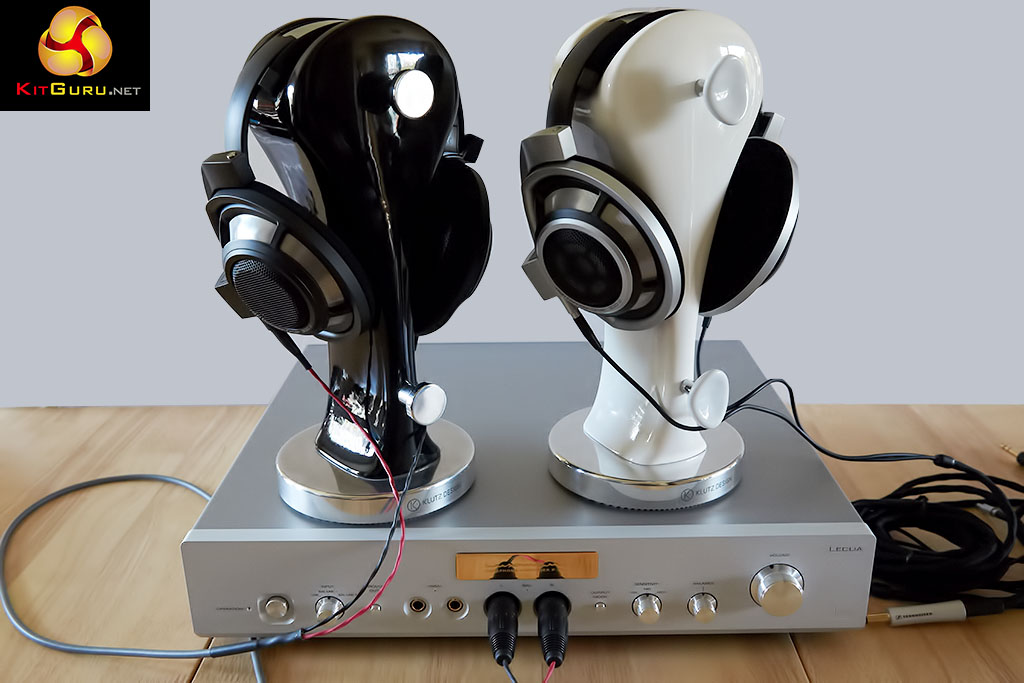
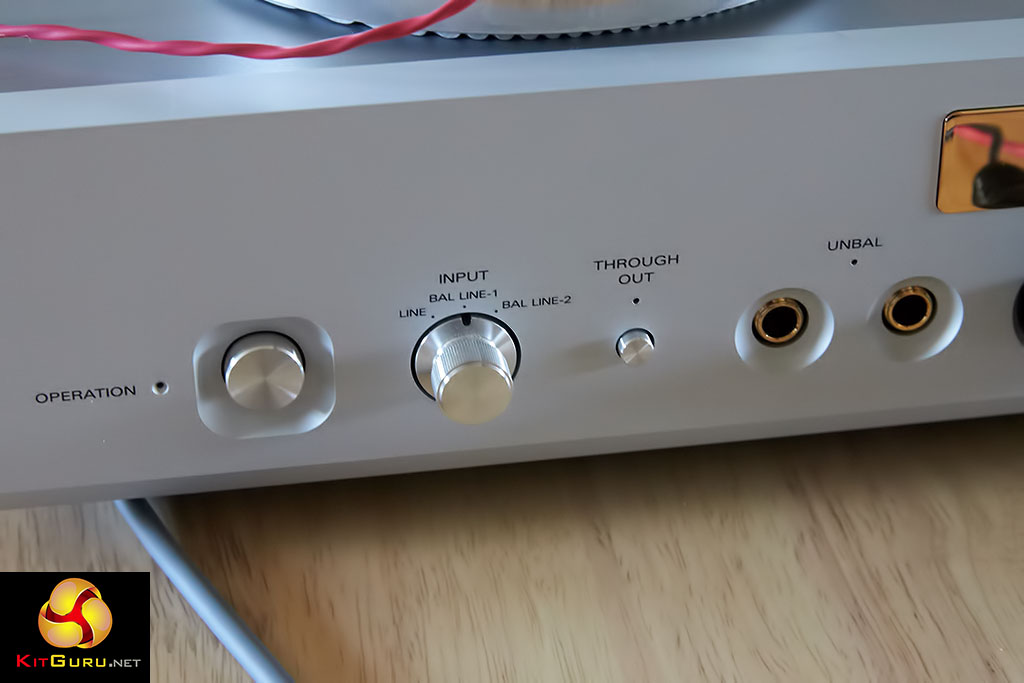
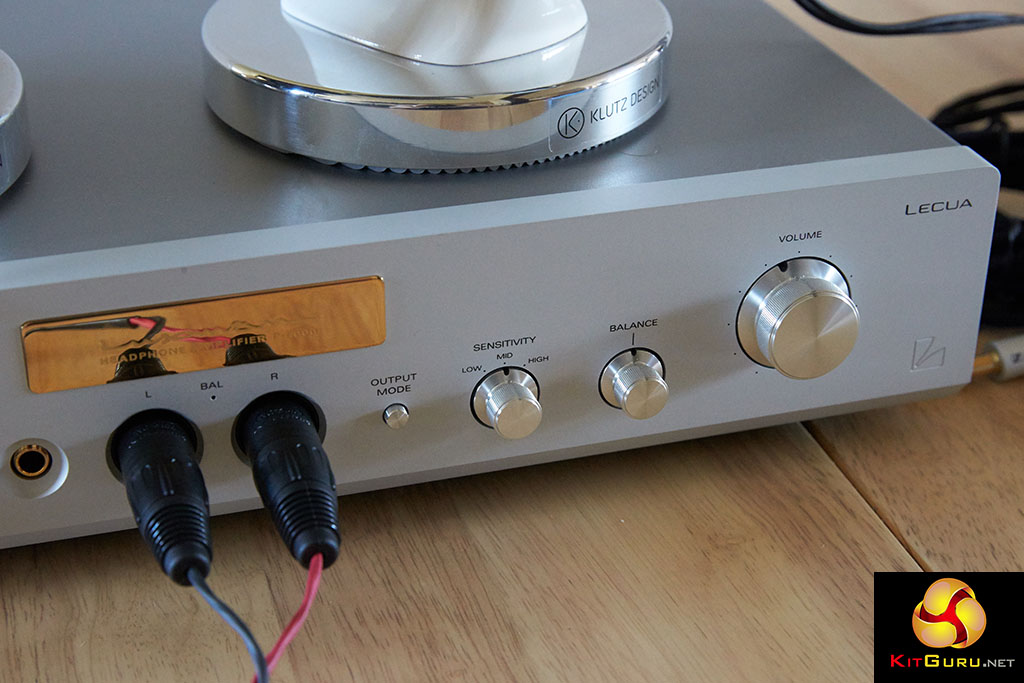
The Luxman P 700 U is a glorious looking amplifier from an engineering viewpoint. It weighs nearly 13kg and can deliver a lot of power to drive planar headphones with relative ease. Output power is rated; Unbalanced: 4W+4W/8Ω, 2W+2W/16Ω, 1W+1W/32Ω, 53mW+53mW/600Ω, Balanced: 8W+8W/16Ω, 4W+4W/32Ω, 213mW+213mW/600Ω.
The front panel of the Luxman P700u amplifier is fully loaded. A selector switch resides next to the power switch – highlighting a line in, next to two sets of balanced inputs.
Next are two 1/4 inch connectors, alongside a set of 2x 3 pin XLR headers. The output mode can be switched between both, and there is a sensitivity knob to change between low, mid and high levels. A balance knob rests beside the Volume knob.
Of special note is the volume attenuator on the P700u. Luxman give this the ‘LECUA 1000-WM (Luxman Electric Controlled Ultimate Attenuator with Weight Matrix Technology) branding. Quite a mouthful, but state of the art according to Luxman. They claim it contains only a few resistors in the circuit per channel at any single volume setting.
I found the medium gain setting was best with both HD800 and HD 800 S. The high setting raised volume levels , but it also introduced a little harshness with some tracks which did not appeal to me. At medium gain, I could not often push past 12 on the dial without causing discomfort. There is plenty of drive on tap for these headphones.
The HD800's sounded better from the Luxman P700U than they did from the Hugo TT, but it was more in the scale of the presentation rather than a dramatic increase in sound quality. A very small metallic tizz was removed from the sound signature and I found myself enjoying the music, especially the legendary vocals of Frank Sinatra and Ella Fitzgerald.
The HD800 S sounded better in all areas than the HD 800 – bass and sub bass response is noticeably enhanced and vocals in the mid range were presented in a more relaxing, yet just as detailed manner. Treble frequencies were not as pronounced, but I was still able to easily pick out fingers gently sliding on guitar strings, ambient breathing in some tracks, and the full soundstage that made the HD800 such an iconic headphone.
There is no doubt in my mind that Sennheiser have managed to smooth out the upper frequencies while maintaining the transparent mid range, epic sound staging and placement of the older headphone, along with a deeper, yet tightly focused bass response.
The Sennheiser HD800 S is a truly remarkable headphone, and while many people will comment negatively on the £1,199.00 price tag – in high end audiophile headfi circles this price, considering what you get … is significantly inexpensive. I say significantly because it is clear in my mind that Sennheiser are issuing a statement to their competitors.
Before you start questioning my sanity on the price point, take any of the other flagship headphones from the likes of Audeze (LCD 4), Hi-Fi Man (HE 1000) or Stax (009), JPS Labs (Abyss 1266) and you will be charged between £2,200 and £4,500 to take any of them home with you. The fact that Sennheiser are now including their (previously optional) £250 XLR 4 pin balanced cable makes the deal just a little bit sweeter.
The Sennheiser HD800 S scores very highly against any of the competition regardless of price and considering all the finest headphones right now utilise Planar or Electrostatic technology it highlights that Sennheiser have been able to push their dynamic driver technology further than anyone else.
I wouldn't go as far to say that the Sennheiser HD800 S are the best headphone on the market. The Stax 009, HiFi Man HE1000 and Audeze LCD 4 are, to my ears, superior headphones when driven properly but the Sennheiser HD800 S offer without question the highest value for money of any flagship headphone on the market today.
They are half the price of the HiFi Man HE1000 and one third the price of the Audeze LCD 4 and Stax 009. You could easily get the Sennheiser HD 800 S with a quality amplifier for the price of any of the other headphones alone and that fact alone could be the deciding point for many people.
Sennheiser have completely succeeded in their drive to improve the iconic HD800. They have smoothed out the rough edges which irritated me so much when using the original headphones, and they have not compromised on the epic sound staging, articulation and detail that ensured the HD800 have been a big seller since their launch 7 years ago. It is worth pointing out that Sennheiser have earned a reputation over the years for building headphones that last for decades. The HD800 has been one of the most reliable headphones on the market, while some of Sennheisers competitors have suffered from driver issues at launch, and even product recalls.
If you want to dive into the high end market by purchasing an ‘end game' headphone, then the Sennheiser HD800 S is one of the most cost effective ways of doing so. Just make sure you don't skimp on amplification as you will never truly experience their full potential.
Pros:
- Incredibly detailed.
- built to the highest standards.
- smoother and more ‘musical' than the original HD800.
- well priced.
- 4 pin XLR cable now included in the box.
Cons:
- Easy to drive with almost any amplifier, but correct partnering will unlock their full capabilites.
KitGuru says: The Sennheiser HD800 S is an update to one of the most iconic headphones released in the last decade. £1,199 is a lot of money, but compared to some of the ‘flagship' competition they seem almost bargain basement.

Thanks for the review. I would like to see more audiophile articles. Have you considered doing one on the upcoming MQA codec/ system? Computeraudiophile did a good write up of this. There is certainly a bit of controversy surrounding it. It would be nice to have an article that cuts through the pros and cons for consumers and how it could change music distribution.