KitGuru KitGuru.net – Tech News | Hardware News | Hardware Reviews | IOS | Mobile | Gaming | Graphics Cards


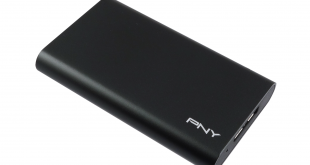
Towards the end of 2019, we reviewed PNY's Pro Elite external SSD, and today we are looking at its slower but cheaper sibling, known simply as the PNY Elite – and it's even smaller in size than the Pro Elite. Priced at £120 for the 960GB model, is this a good option for those looking for an affordable but high capacity external drive?
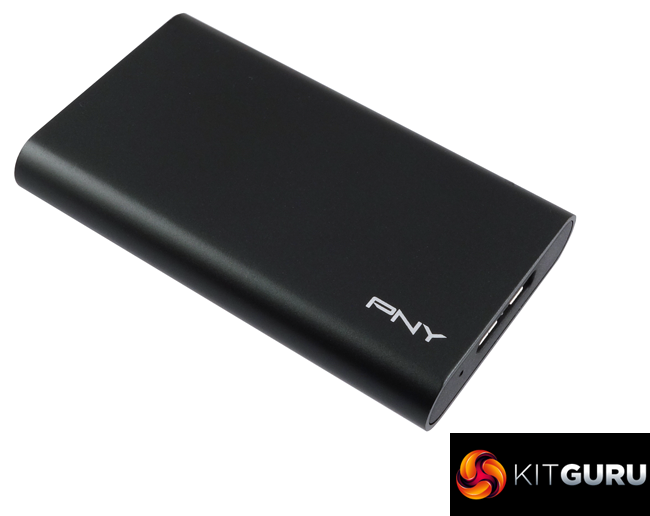
As with the Pro Elite line, the Elite range is made up of three capacities albeit slightly smaller than the Pro Elite; 240GB, 480GB and the flagship 960GB drive we are reviewing here. PNY doesn’t state what controller or which NAND the drive uses in the specification sheet but hazarding a guess for the NAND, we would say its 3D TLC NAND.
There are small differences between the drives when it comes to Sequential performance. The 240GB and 480GB are rated up to 430MB/s and 400MB/s for reads and writes respectively. The 960GB drive is rated up to 420MB/s for both read and writes.
PNY back the Elite with a 3-year warranty.
Physical Specifications:
- Usable Capacities: 960GB.
- NAND Components: n/s.
- Interface: USB 3.1 Gen1 Micro-B.
- Form Factor: External.
- NAND Controller: n/s.
- Dimensions: 60 x 36 x 9mm.
- Drive Weight: 50g.
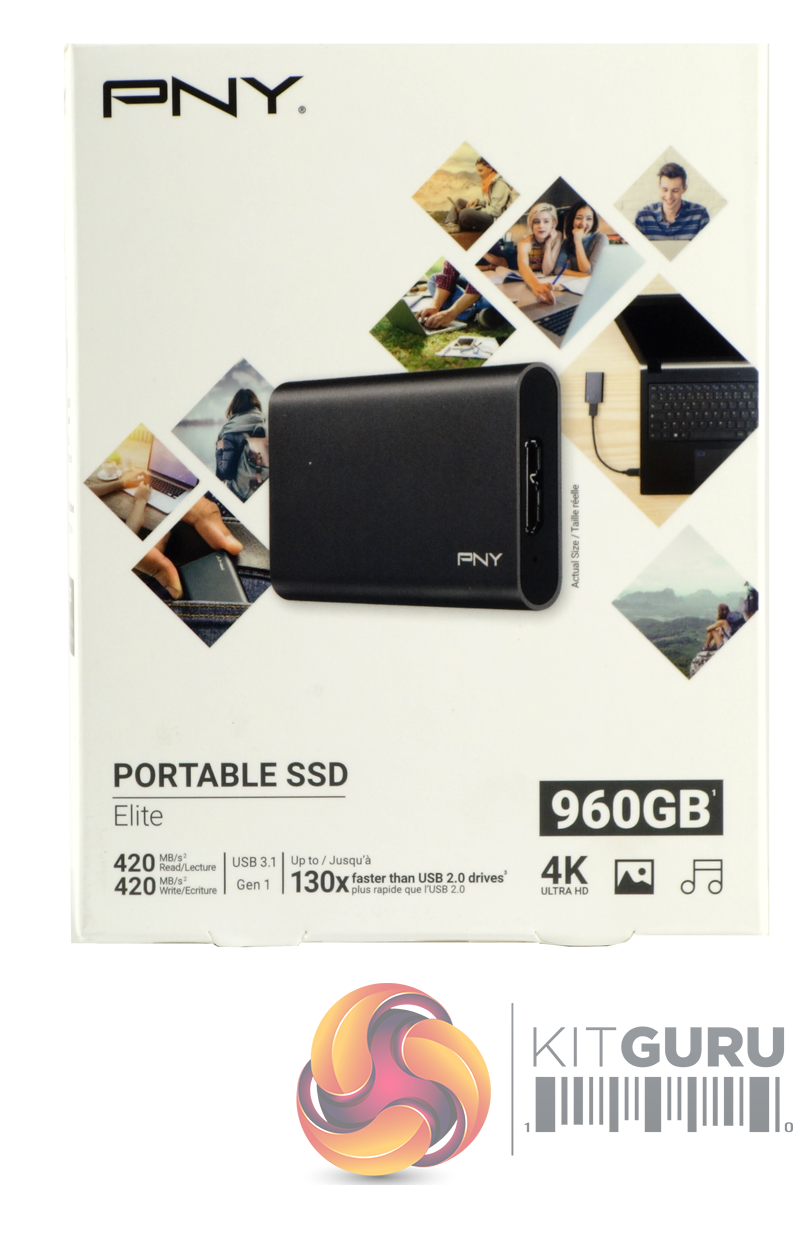
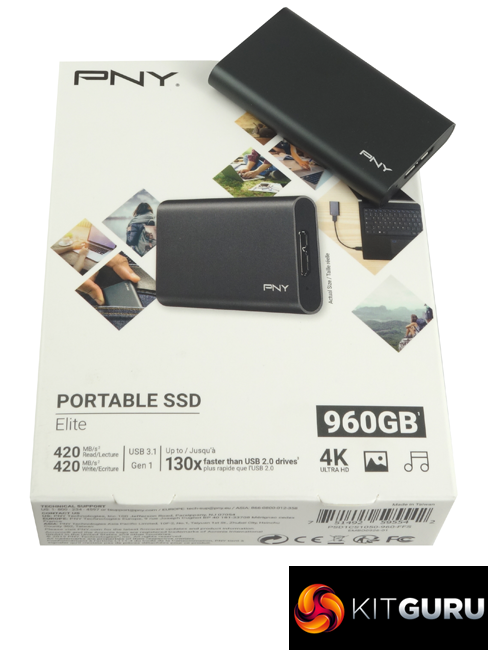
The PNY Elite comes in a small stout box with an image of the drive on the front. Under the image to the left are the maximum claimed Sequential performance speeds (420MB/s for reads and writes) and the interface type, USB 3.1 Gen1. To the right is a box displaying the capacity of the drive.
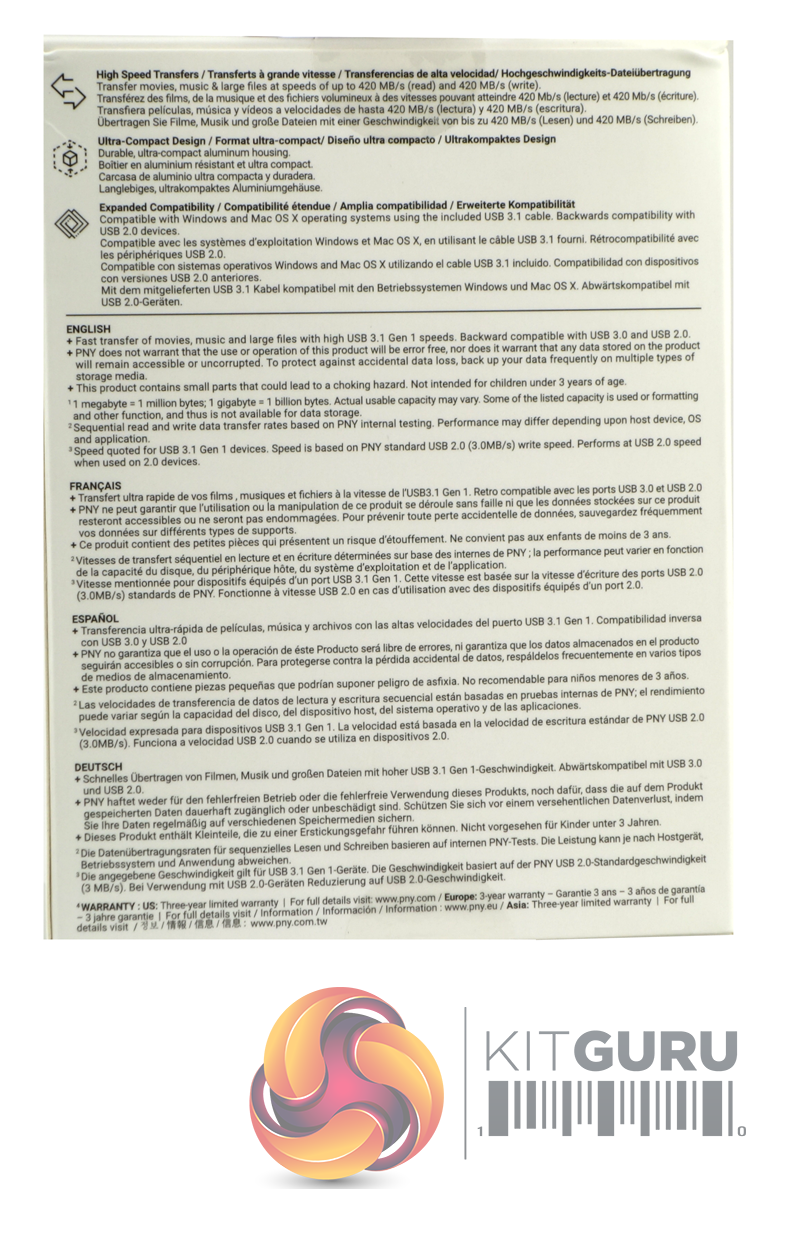
The rear of the box has some small multi-lingual lists of some of the drive’s features and some general information regarding usage.
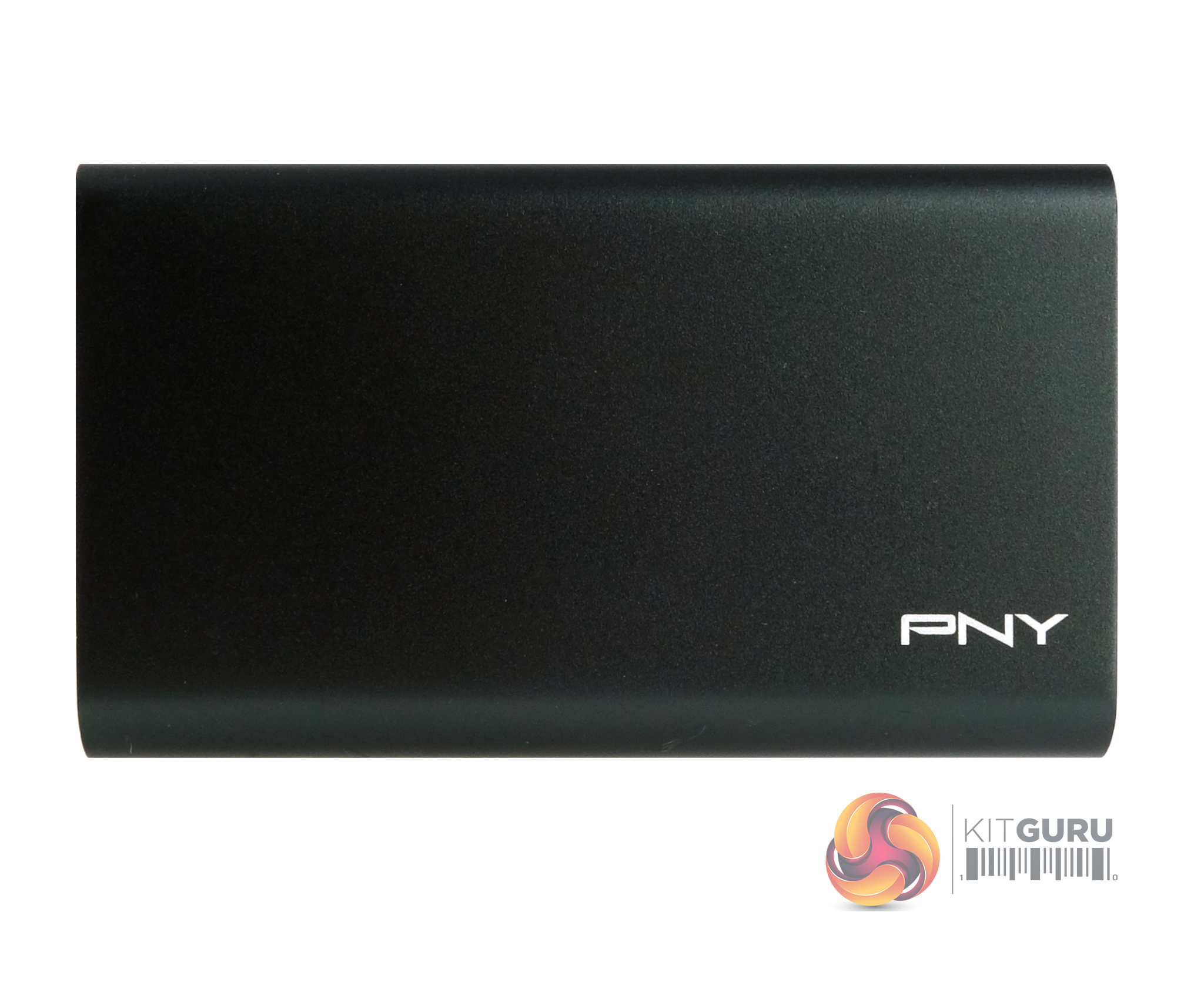
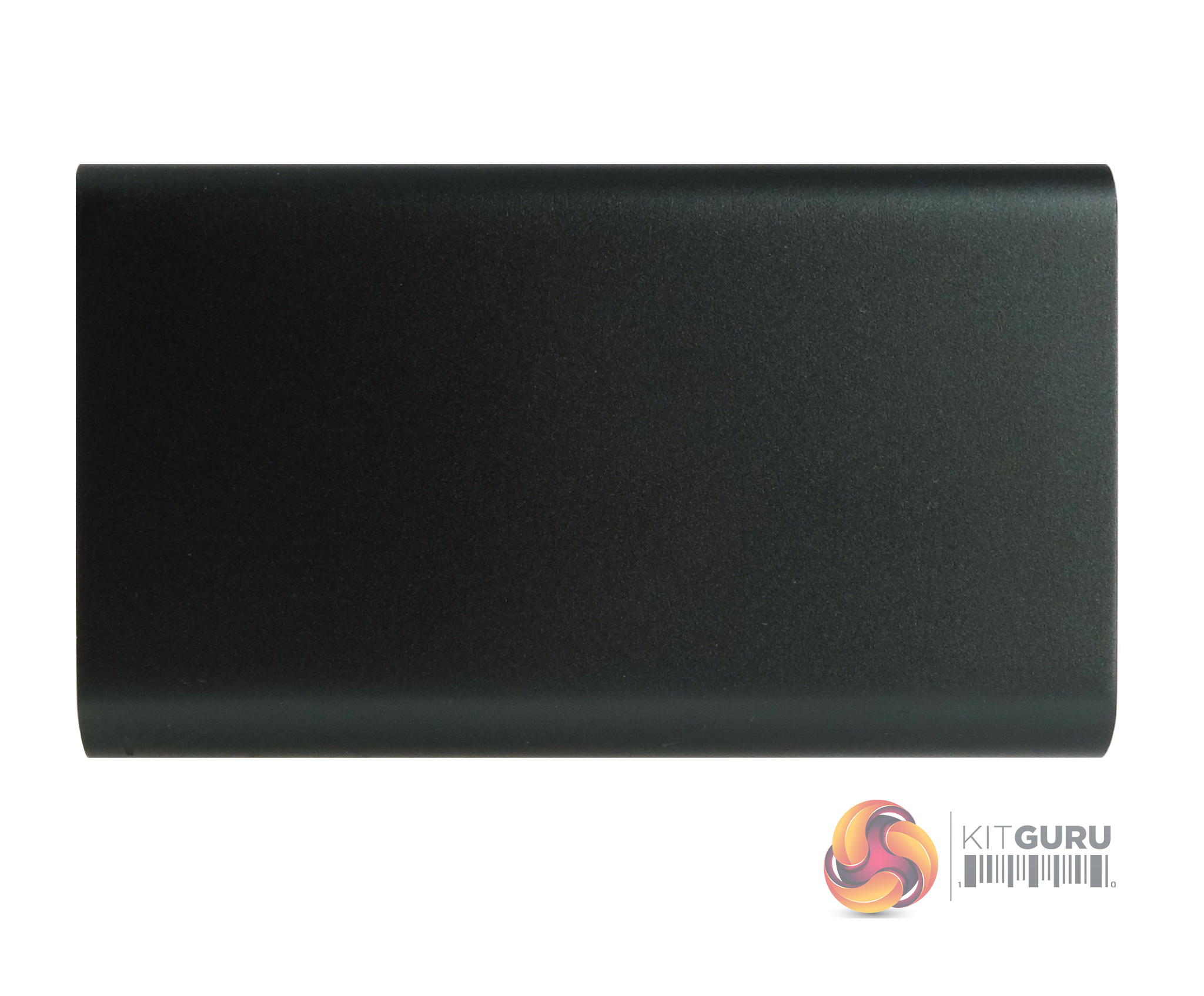
The Elite really is tiny, the aluminium enclosure measuring just 60 x 36 x 9mm and weighing in at a featherweight 50g.
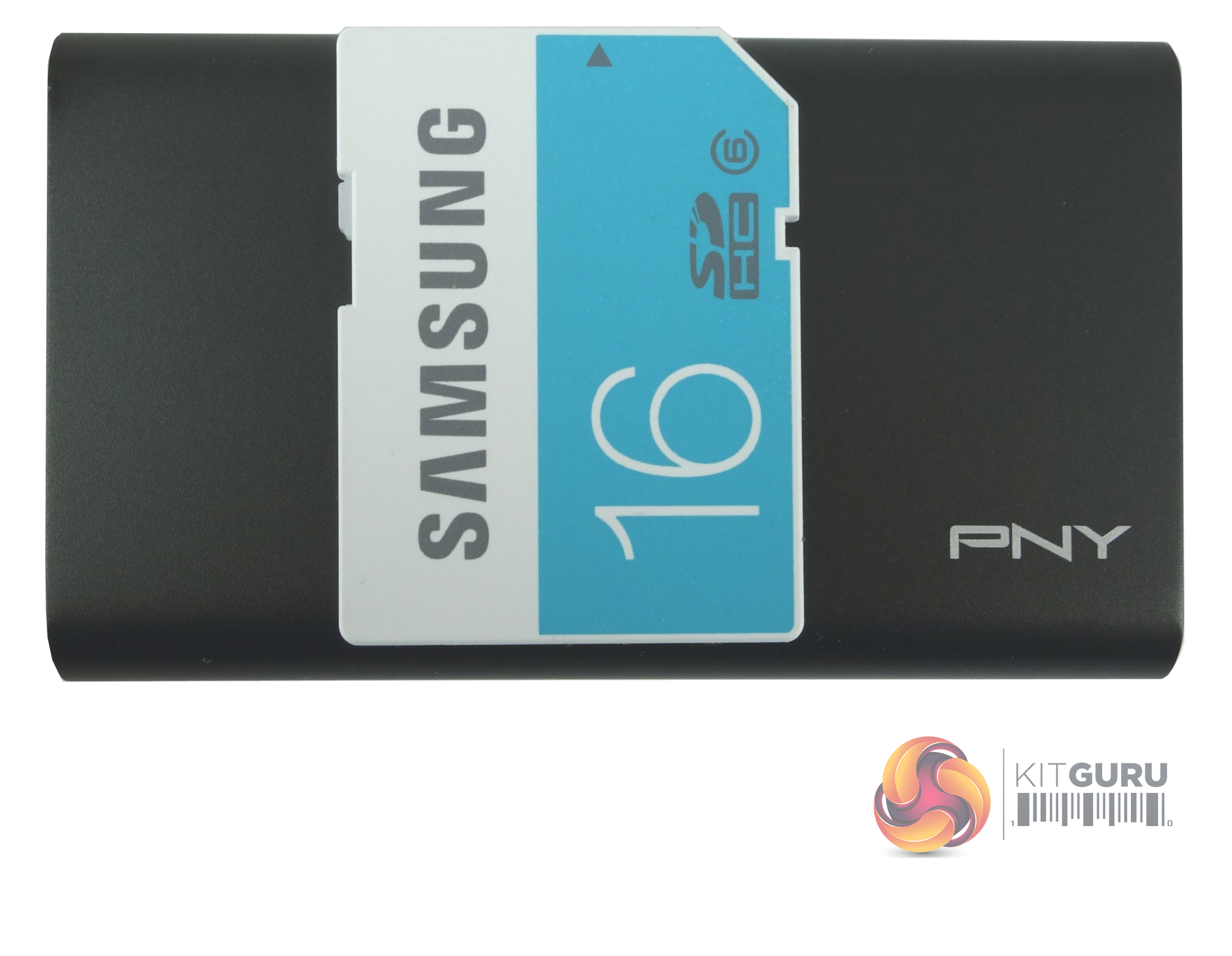
Just to emphasise just how small the Elite drive is, we've compared it to an SD Card.
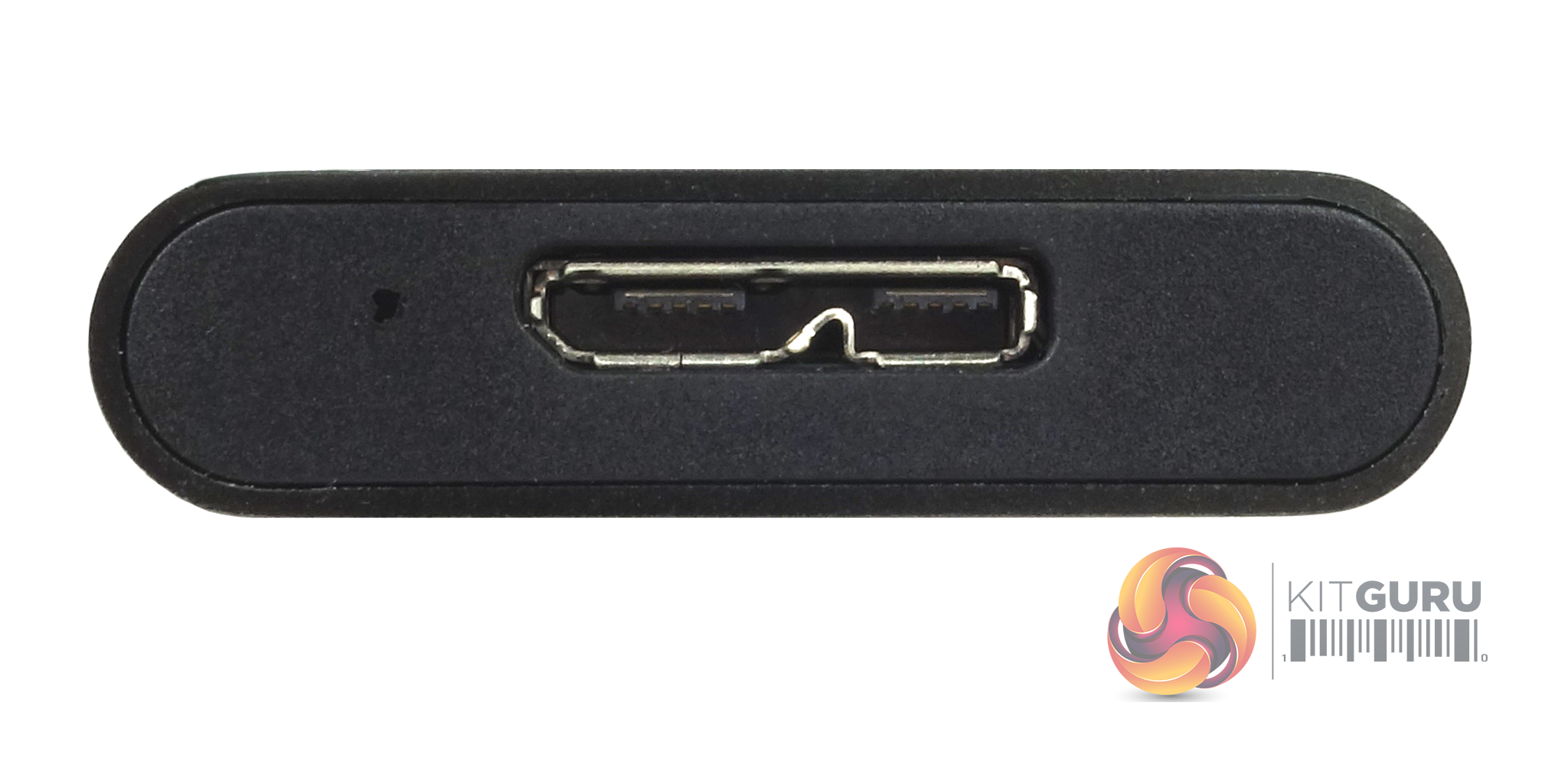
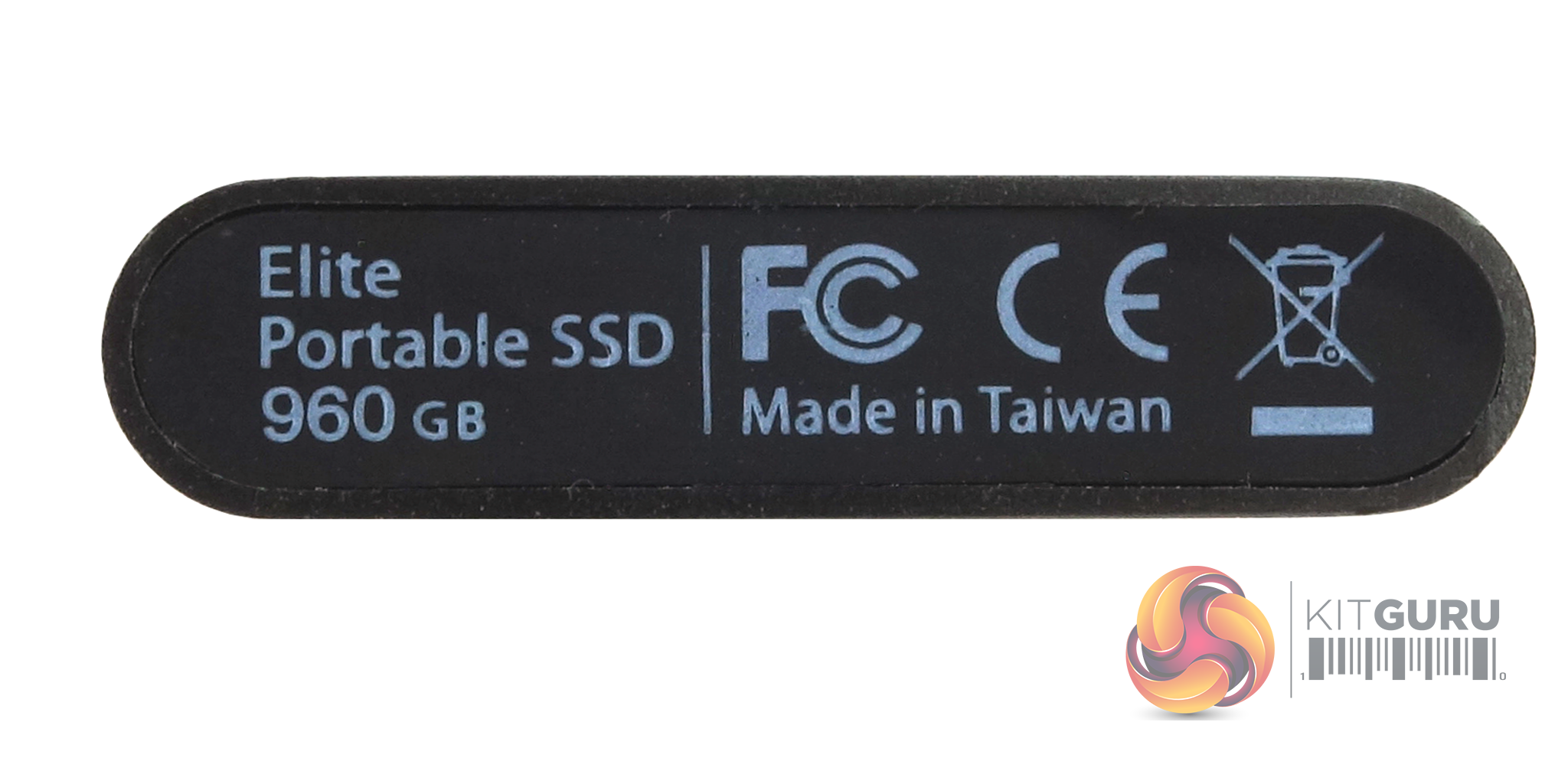
The Pro Elite uses a USB 3.1 Gen1 Micro-B connection.
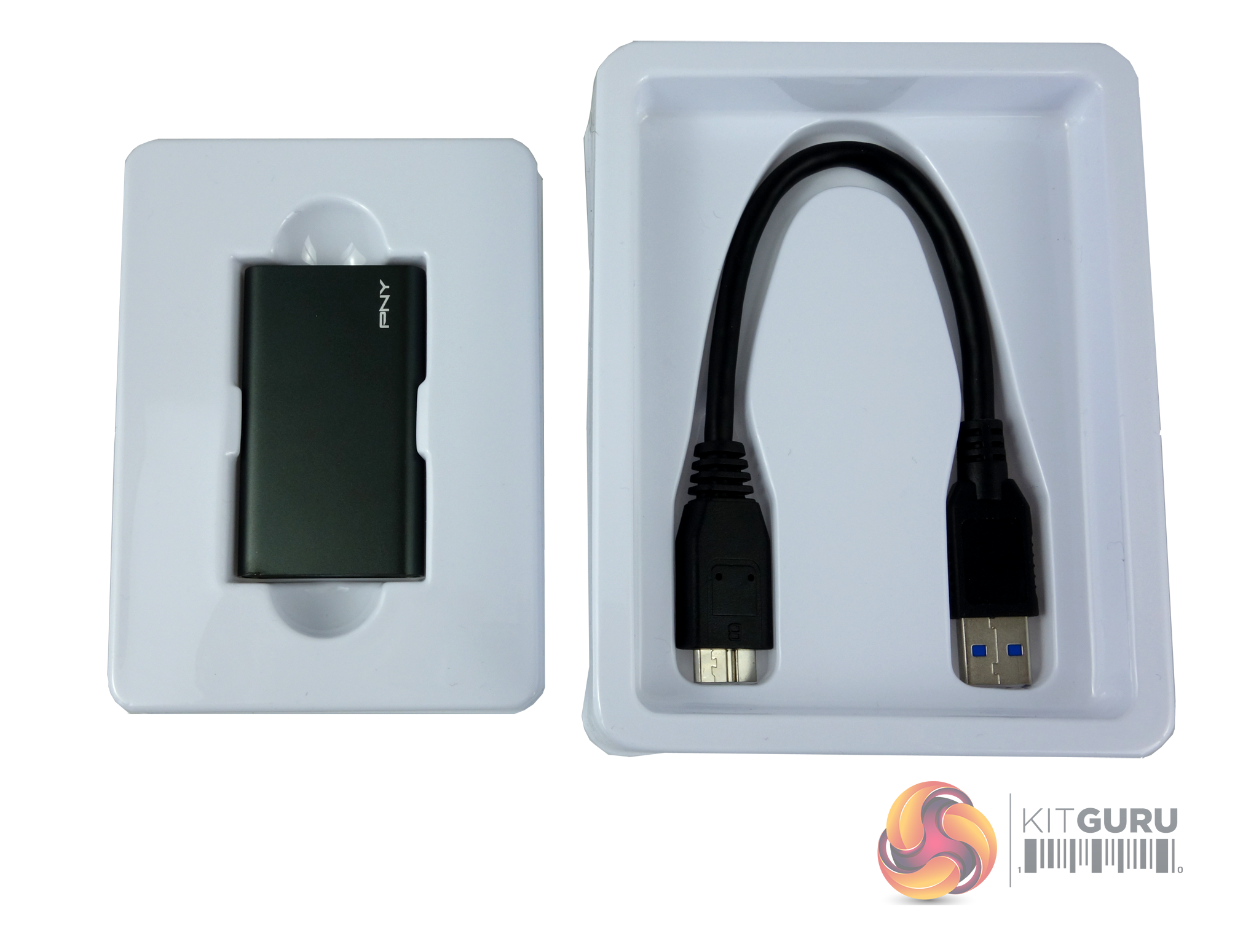
The drive sits in a two-tiered plastic tray inside the box. The top layer holds the drive very snuggly while the bottom is home to the bundled USB 3.1 Micro-B to USB-A cable, which is a bit on the short side. Also bundled in with the drive is a serial number for Acronis True Image, which can be downloaded from the PNY website.
Out of the box, the drive is factory formatted as exFAT but to test the drive we re-formatted the drive as NTFS.
CrystalDiskmark is a useful benchmark to measure theoretical performance levels of hard drives and SSD’s. We are using V7.
The ATTO Disk Benchmark performance measurement tool is compatible with Microsoft Windows. Measure your storage systems performance with various transfer sizes and test lengths for reads and writes. Several options are available to customize your performance measurement including queue depth, overlapped I/O and even a comparison mode with the option to run continuously. Use ATTO Disk Benchmark to test any manufacturers RAID controllers, storage controllers, host adapters, hard drives and SSD drives and notice that ATTO products will consistently provide the highest level of performance to your storage.
AS SSD is a great free tool designed just for benching Solid State Drives. It performs an array of sequential read and write tests, as well as random read and write tests with sequential access times over a portion of the drive. AS SSD includes a sub suite of benchmarks with various file pattern algorithms but this is difficult in trying to judge accurate performance figures.
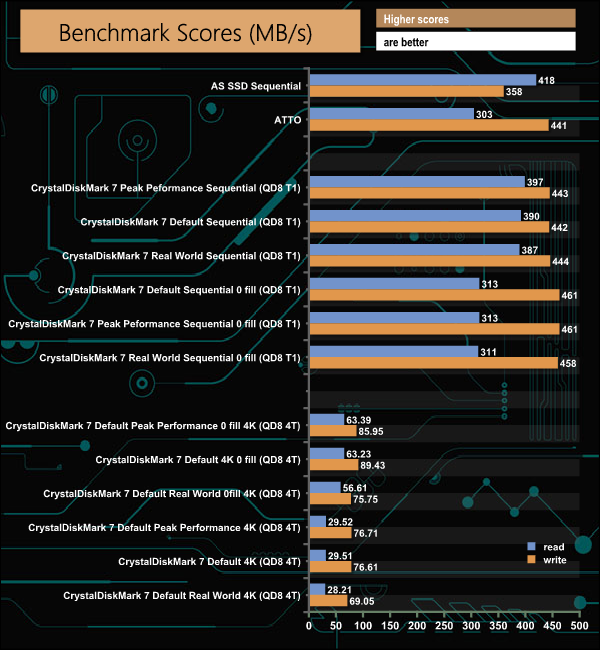
PNY rate the Sequential performance of the 960GB drive as up to 420MB/s for both reads and writes. When tested with ATTO benchmark, our review sample produced a read score of 303MB/s, way off the official maximum. However, the ATTO write score of 441MB/s was 21MB/s faster than the official figure. Testing the drive with the AS SSD benchmark produced a read figure of 418MB/s, confirming the official figure, but the write figure of 358MB/s was well shy of the official rating of the drive.
IOMeter is another open-source synthetic benchmarking tool which is able to simulate the various loads placed on the hard drive and solid-state drive technology.
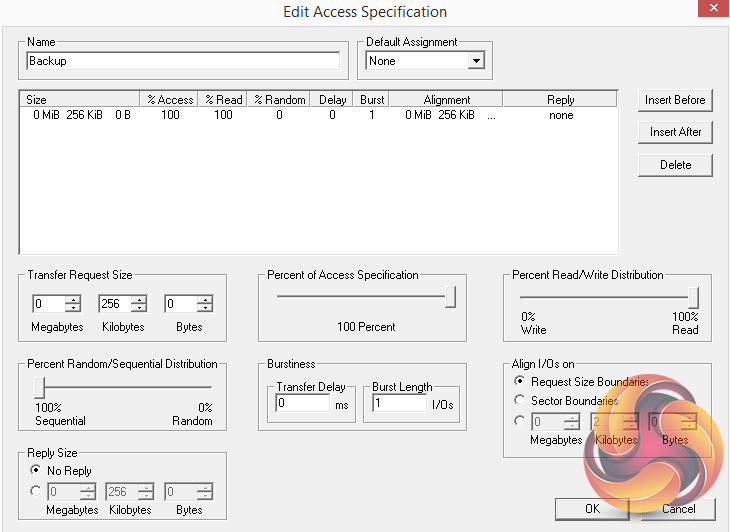
We set IOmeter up (as shown above) to test both backup and restore performance on a 100GB file.
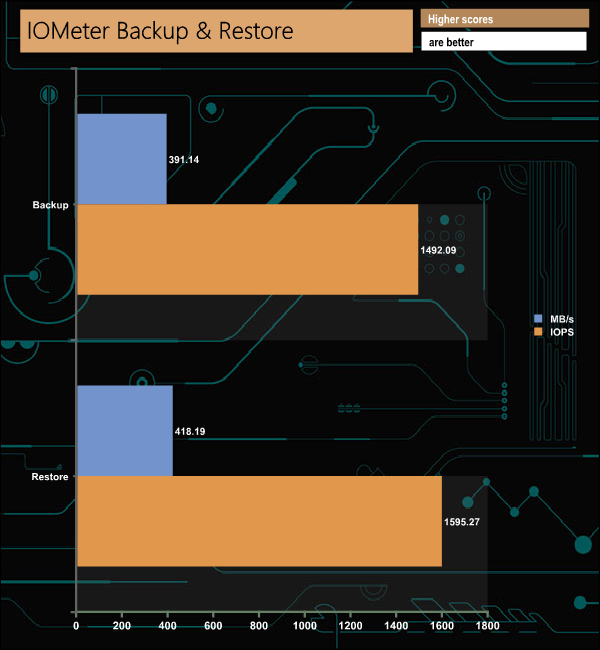
The 391MB/s and 418MB/s figures we got from the drive for our backup and restore tests respectively are decent enough for an external drive.

In our throughput test, the reads peaked at 378.77MB/s at the 16MB block mark at the end of the test run. Writes peaked at 427.56MB/s at the 1MB block mark before falling to finish the test at 359.30MB/s
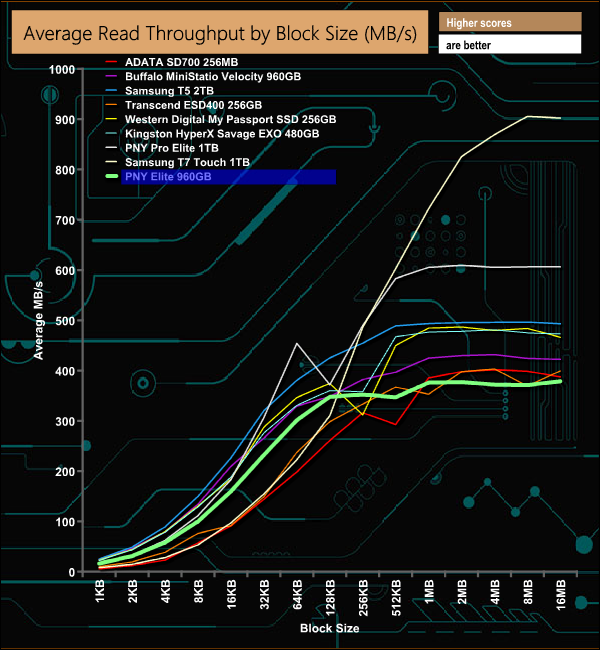
The PNY Elite's performs quite strongly at the beginning of our read throughput test, but at around the 128KB block mark the performance stalls and begins to plateau out.
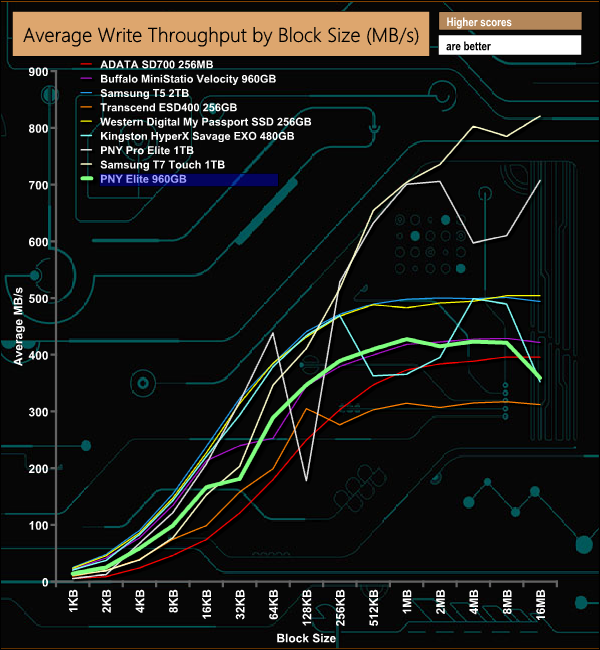
In the write throughput test, there is a dip in performance at the 32KB mark but the drive recovers well to perform strongly until the 1MB block mark where the performance starts to drop.
To test real-life performance of a drive we use a mix of folder/file types and by using the FastCopy utility (which gives a time as well as MB/s result) we record the performance of drive reading from & writing to a 256GB Samsung SSD850 PRO.
We use the following folder/file types:
- 100GB data file.
- 60GB iso image.
- 60GB Steam folder – 29,521 files.
- 50GB File folder – 28,523 files.
- 12GB Movie folder – 24 files (mix of Blu-ray and 4K files).
- 10GB Photo folder – 621 files (mix of .png, raw and .jpeg images).
- 10GB Audio folder – 1,483 files (mix of mp3 and .flac files).
- 5GB (1.5bn pixel) photo.
- BluRay Movie – 42GB
- 21GB 8K Movie demos (11 demos)
- 16GB 4K Raw Movie Clips (9 MP4V files).
- 4.25GB 3D Printer File Folder.
- 1.5GB AutoCAD File Folder.
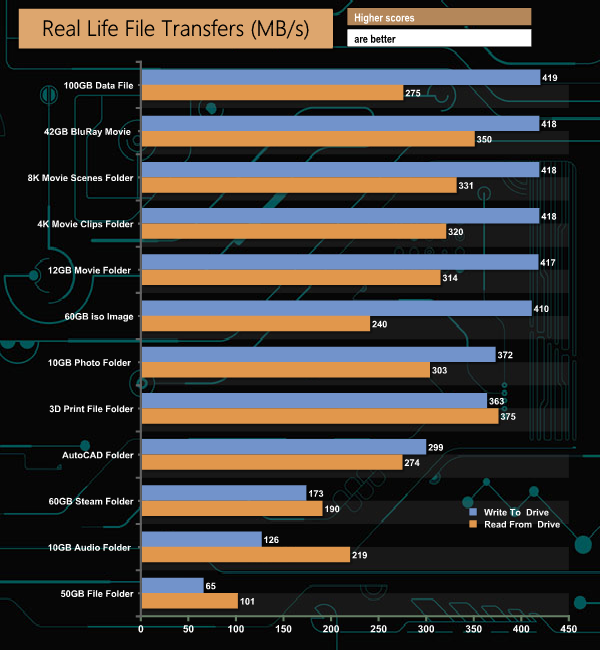
The 960GB Elite didn’t have any real problems dealing with our real-life file transfer tests. It handles larger file sizes much more efficiently than smaller ones that make up the 60GB Steam, 50GB File and 10GB Audio folders.
When we reviewed the PNY Pro Elite external drive we commented on how small it was… well, PNY have managed to make the Elite is even smaller. A sleek aluminium design, it measures just 60 x 36 x 9mm and weighs in at just 50g. The drive is small enough to get lost in even the smallest pocket.
Available in three capacities, 240GB, 480GB and 960GB, the Elite uses a USB 3.1 Gen1 interface. Unfortunately, PNY doesn’t state what controller or which NAND the drive uses in the specification sheet but the smart money would be on 3D TLC NAND.
The official Sequential performance figures for the 960GB drive are up to 420MB/s for reads and writes. Using the ATTO benchmark we couldn’t reach those maximum figures for reads, the review drive producing a figure of 303MB/s. However, when it comes to ATTO writes, the drive bettered the official figure at 441MB/s. Switching over to the AS SSD benchmark we got a Sequential read figure of 418MB/s, confirming the official figure, but the write figure of 358MB/s was well shy of the official rating of the drive.
In our real-life file transfer tests, the drive topped 400MB/s on a number of occasions when transferring the data from an SDD to the Elite, with the fastest speed being 419MB/s when dealing with the 100GB data file. Coming back the other way, the fastest speed we saw was the 375MB/s from the 3D Print file folder transfer.
We found the 960GB PNY Elite on Argos.co.uk for £119.99 (inc VAT) HERE.
Discuss on our Facebook page HERE.
Pros
- Very small format.
- Overall performance.
Cons
- USB cable a bit on the short side.
- 4K performance is a little disappointing.
KitGuru says: Tiny in stature, PNY's Elite 960GB external SSD provides a useful amount of storage combined with good performance.