 KitGuru KitGuru.net – Tech News | Hardware News | Hardware Reviews | IOS | Mobile | Gaming | Graphics Cards


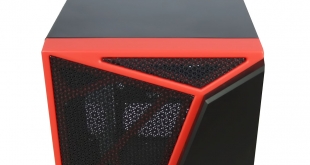
Corsair's Carbide series is renowned for its variety, with cases to match many a system build. At the budget end, one of its more attractive products is the Spec-04; a reassuring reminder that for around £60 both engaging design and a side-panel window are attainable.
Corsair has spotted an opportunity for the Spec-04 though, choosing to augment it to fit a current trend. As the name suggests, the Carbide Spec-04 Tempered Glass switches out the perspex. In its place is a full glass side panel offering an unimpaired internal view.
A single change might not seem a big deal for a budget case. Actually it can make a huge difference, especially when appearance can put users off cases which otherwise have ample options and features. In this review we re-visit the benefits and sticking points of the Spec-04, to find if a tempered glass side can lift a largely dependable chassis.
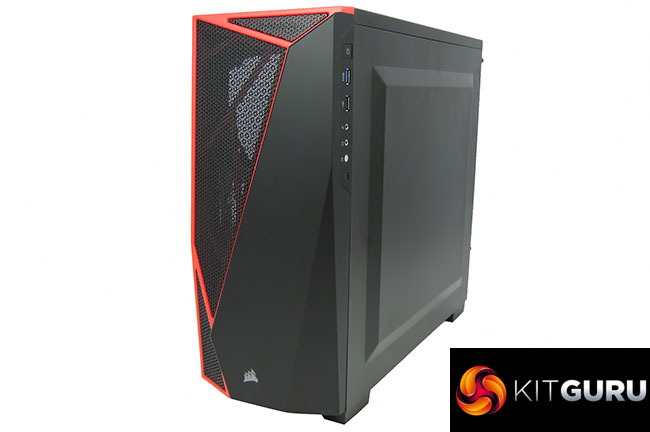
Specification
- Type: Midi Tower Case
- Motherboard Support: ATX (up to 272mm), Micro-ATX, Mini-ITX
- Colour: Black with red front panel detail
- Case Material: Steel, Plastic, Tempered Glass
- Power Supply Orientation: Bottom
- Internal 3.5″ Bays: 3
- Internal 2.5″ Bays: 2
- Expansion Slots: 7
- Front Ports: 1 x USB3.0, 1 x USB2.0, Audio x 2
- Fans included: 1x 120mm w/ Red LEDs
- Fan mounts – 2 x 120mm/140mm, 3x 120mm
- Front radiator compatibility: 1 x 120/140/240mm
- Read radiator compatibility: 1 x 120mm
- 140mm radiator mounts: 140mm front
- Clearance: VGA – 370mm, CPU Cooler – 150mm, PSU – 225mm
- Dimensions: 433mm H x 196mm W x 484mm D
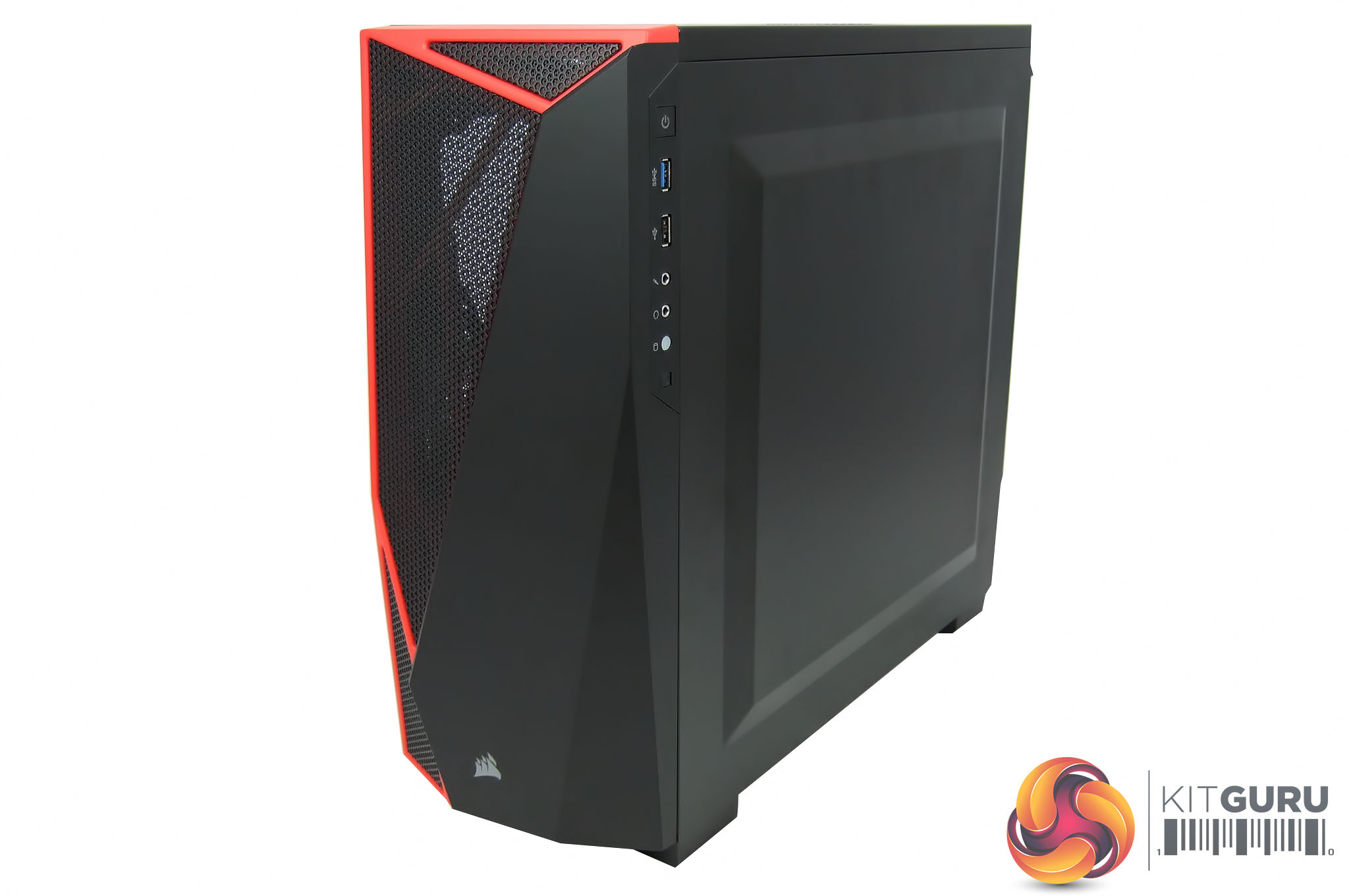
Once out of an unassuming box, the Corsair Spec-04 Tempered Glass cuts a mean shape for a budget case. Our review chassis features red detail on the angular front, and a quick look is enough for us to want to get cracking with a build.
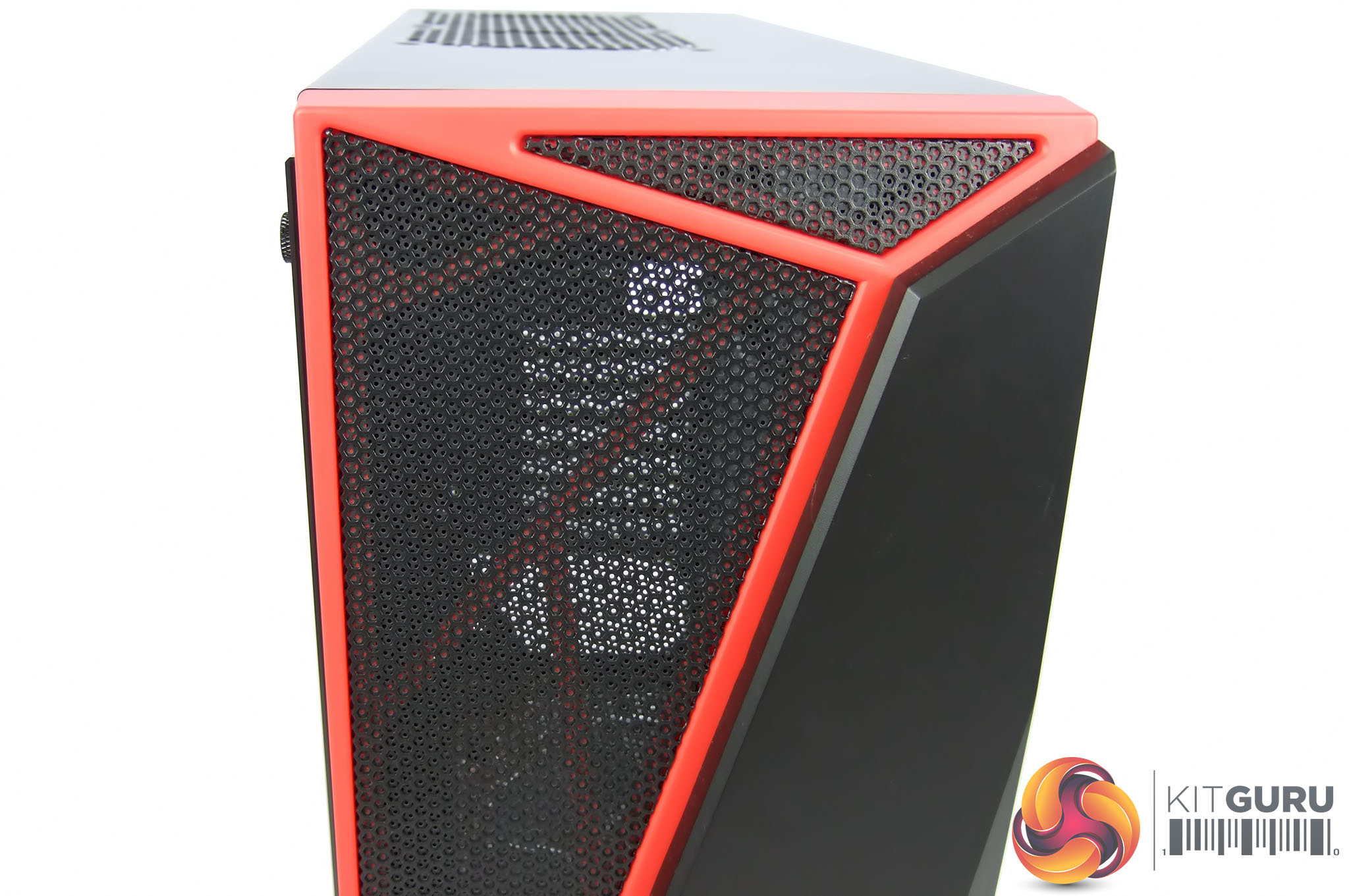
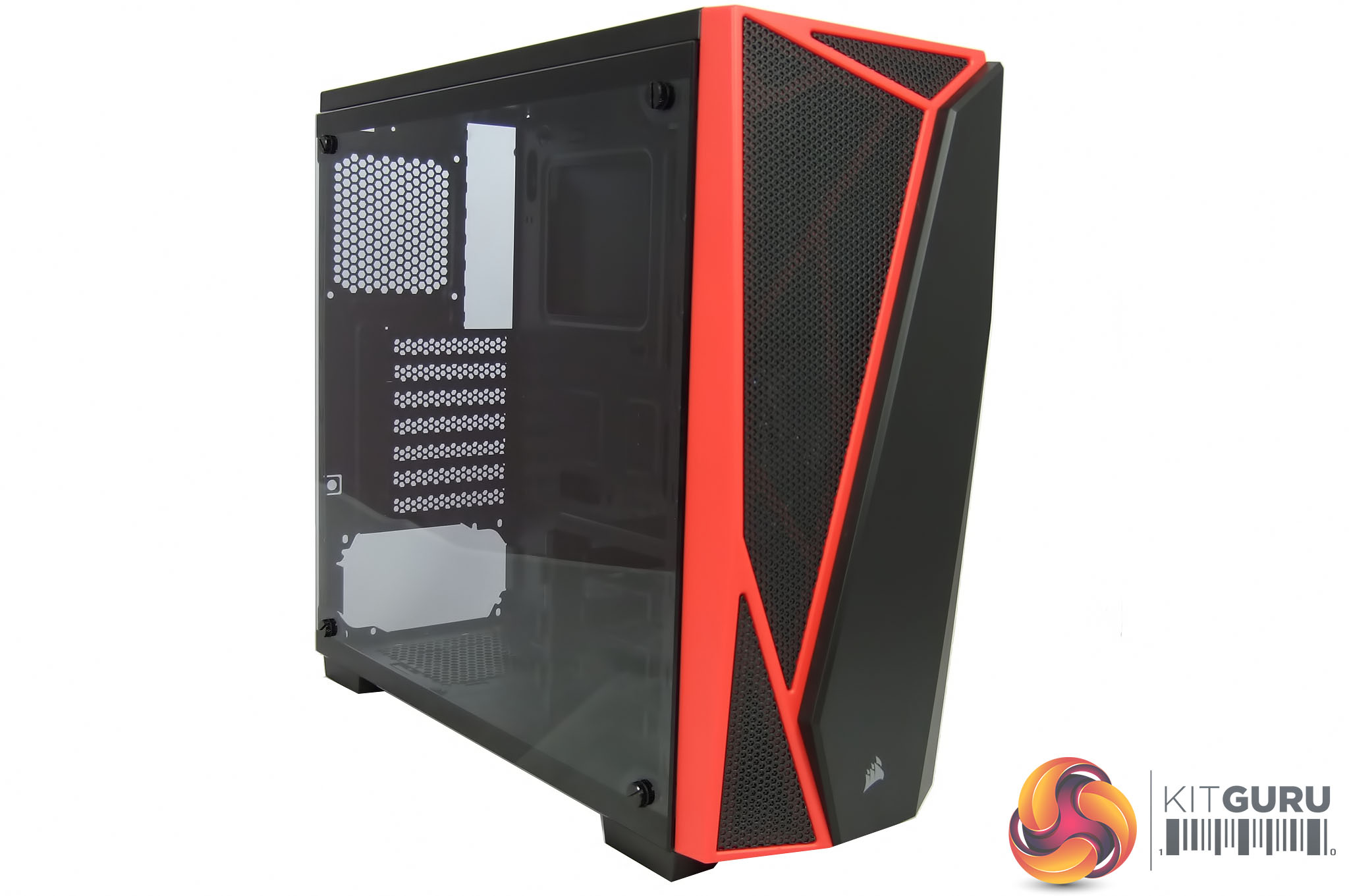
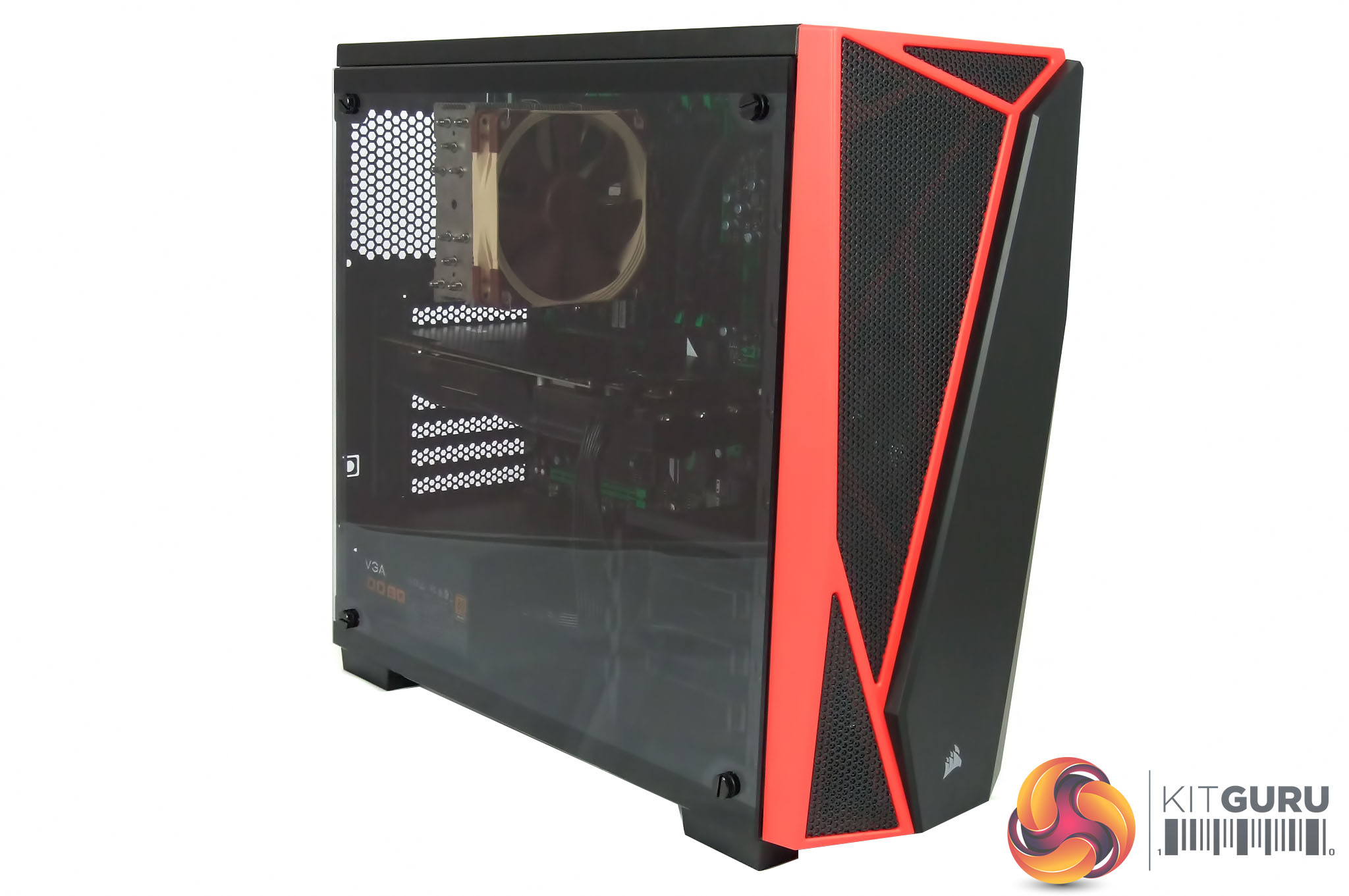
Our enthusiasm is particularly fired by the left-hand side of the case, where the headlining glass panel looks not a bit out of place. In fact it adds significantly to the style – adding class to what is otherwise a smart and functional design.
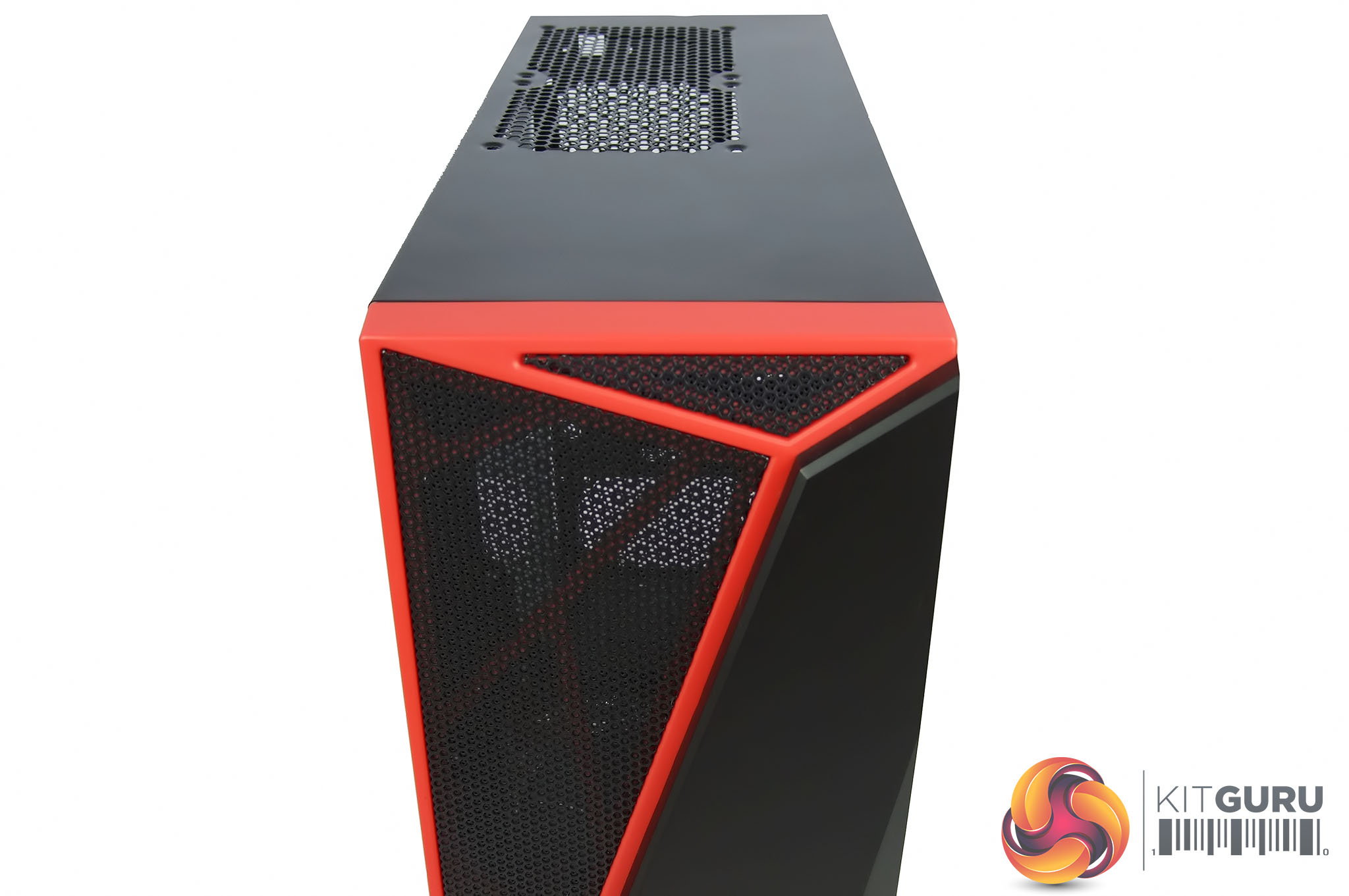
A quick look around the case is enough to refresh our memories. The I/O is at the top of the front-right edge of the case, leaving the front panel an untouched experiment in geometric design. If we peek over the top of the front panel, we see two fan bays available for added cooling.
At the rear of the case, the key thing to note is the brace securing the PCI-E expansion slots. The brace’s two screws and the brace itself must first be removed before any slot cover.
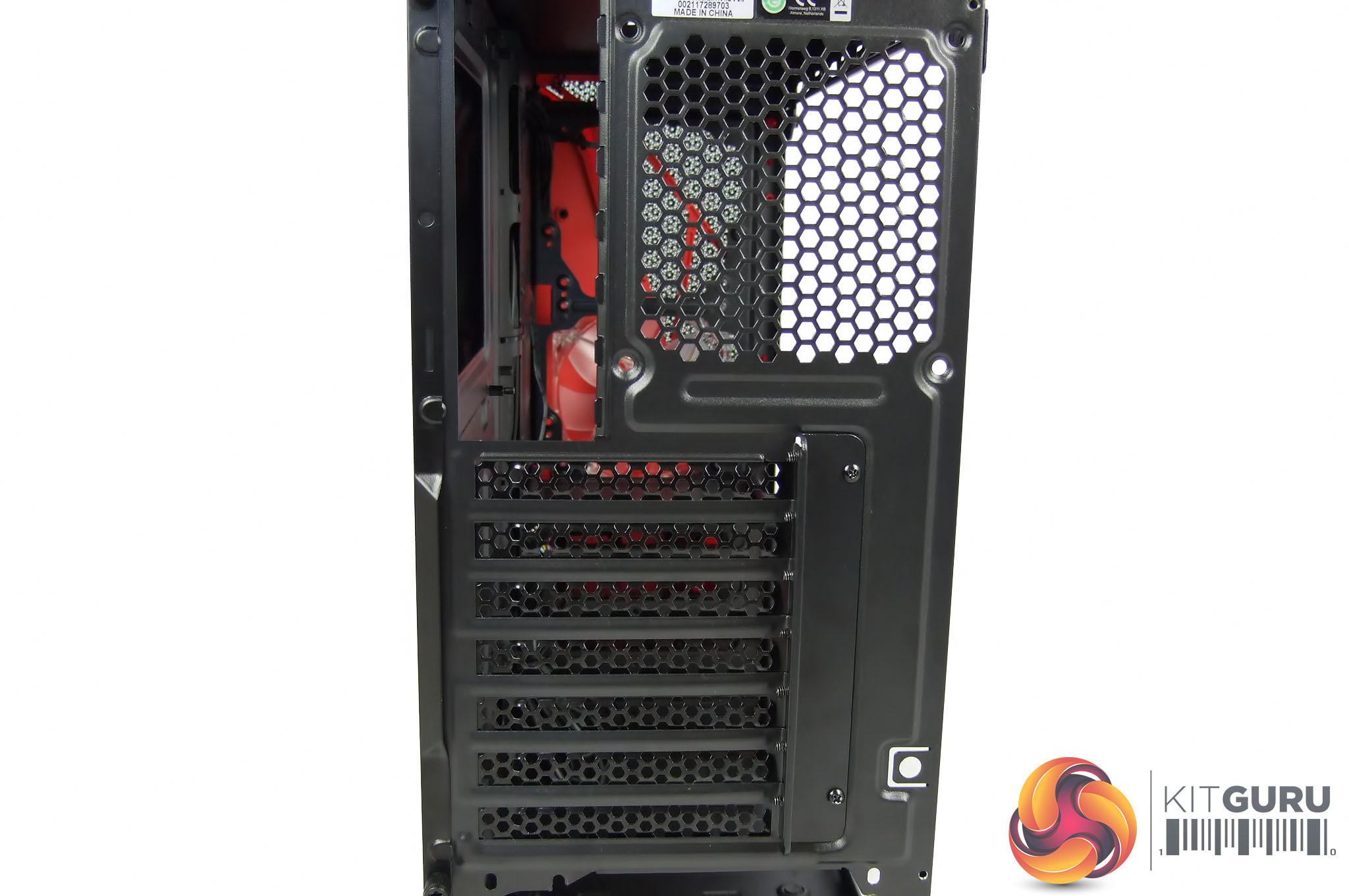
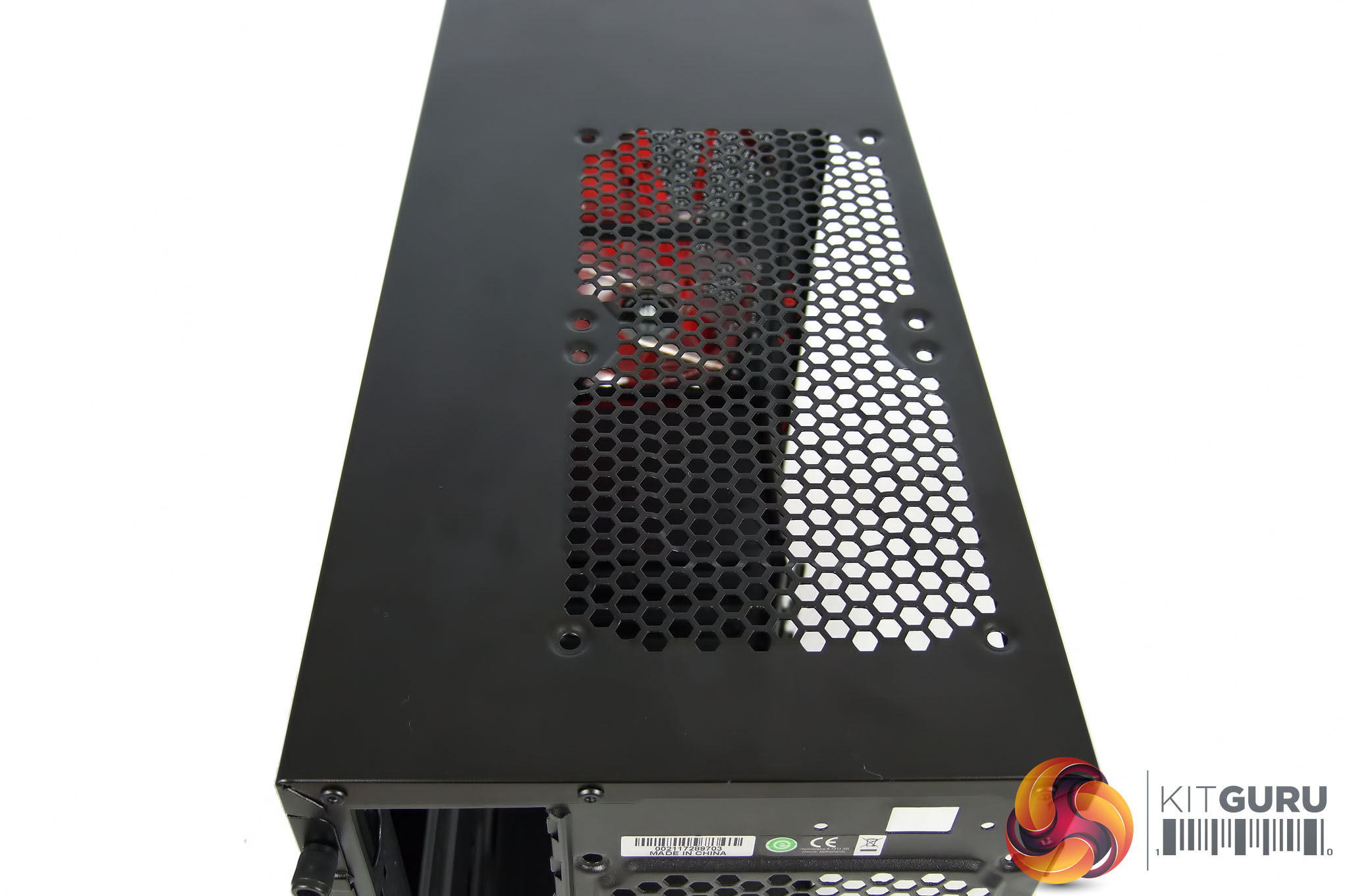
Just above the slots, we can see the Spec-04 Tempered Glass makes provision for a single exhaust fan.
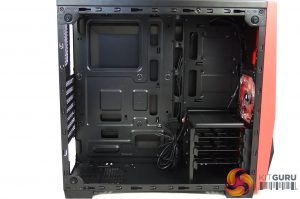
Removing the side panel, we get our first look behind the shiny glass curtain.
Nothing problematic: to the bottom left is a standard PSU dust cover, and everything else appears sensibly designed. What is immediately apparent, and most obvious, is the space in the top-right of the case: a lack of any drive bays means for easy installation of an additional intake fan.
It also allows some space for a liquid-cooling option, as shown in Leo’s custom watercooled Spec-04 review here.
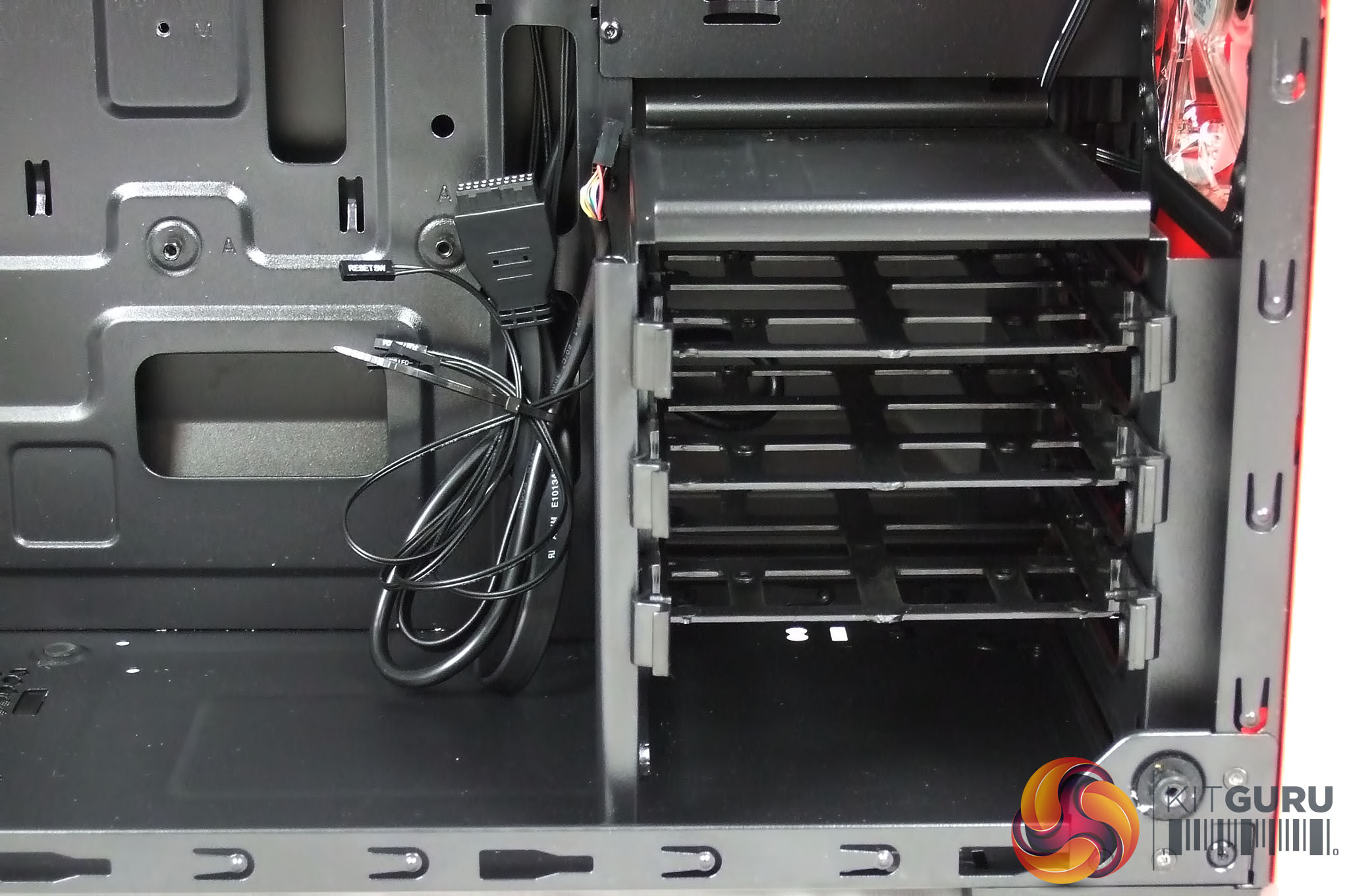
Below the installed intake fan the case offers three brackets for 3.5” drives. To the left of the drive bays, we find the cables bundled and ready to go. It’s important to note that the cables came bundled with a wire tie, not a cable tie as shown.
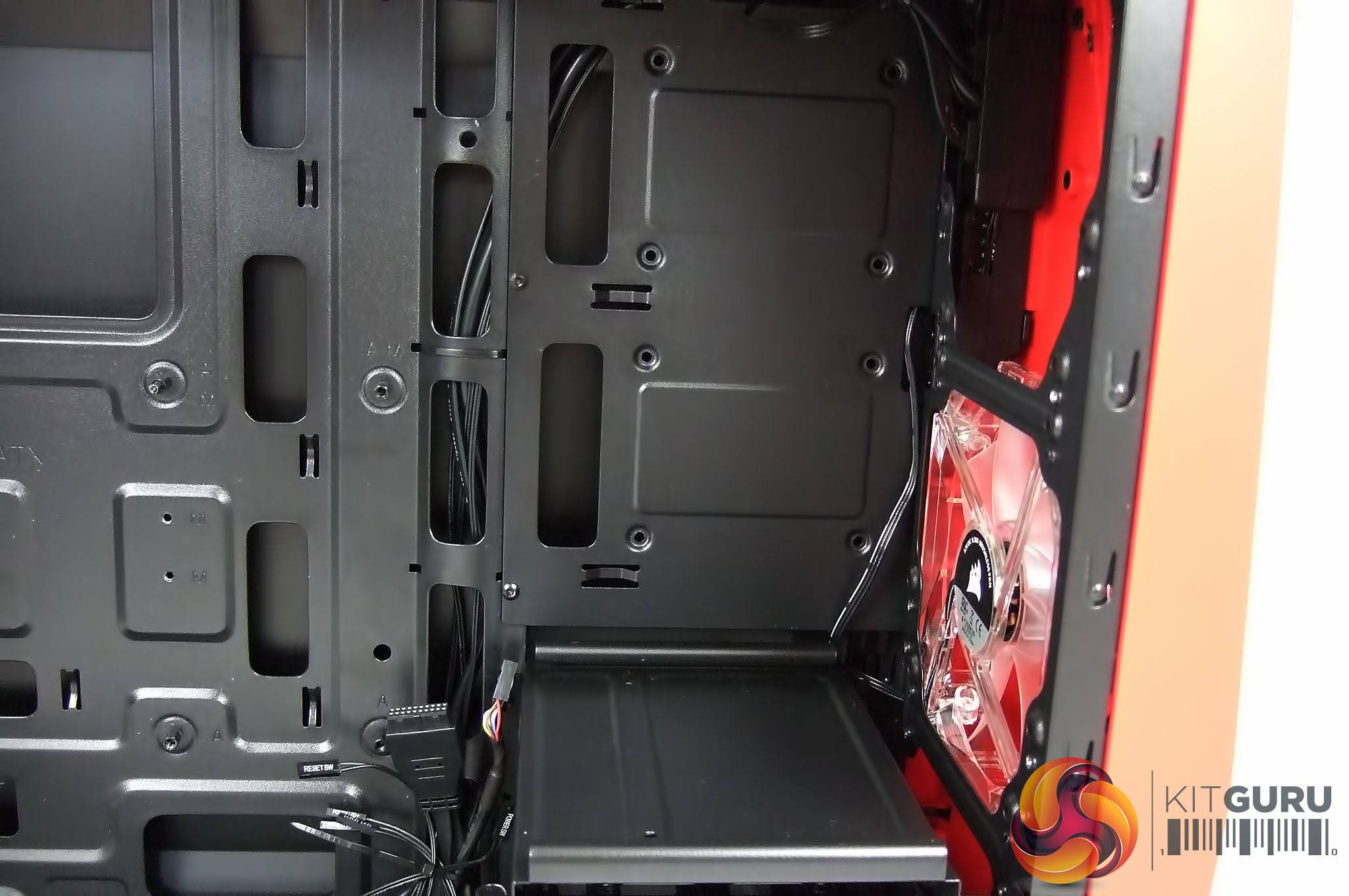
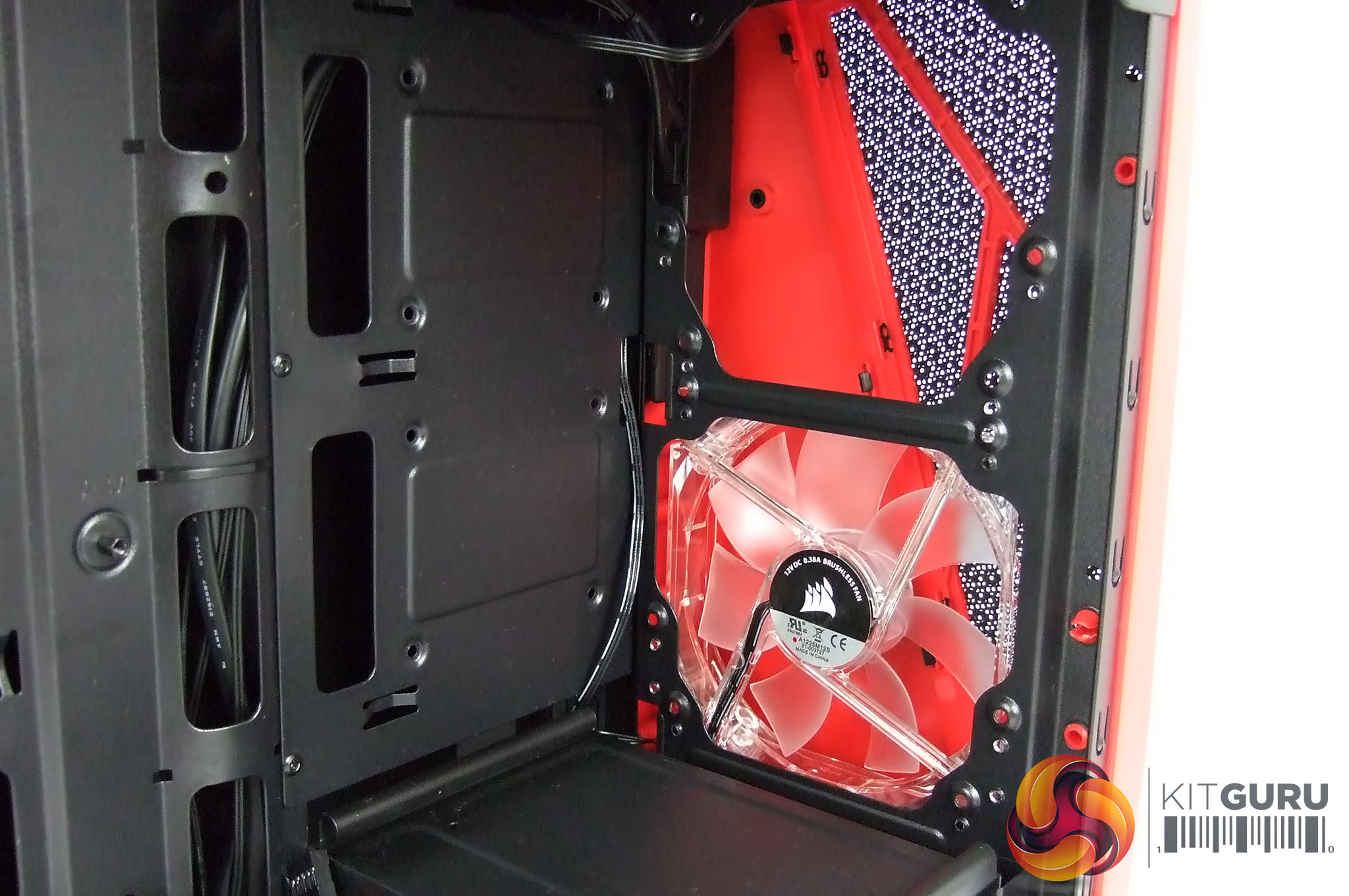
Back up above, the area vacated by physical media drives also opens an opportunity for 2.5” drive installation. This case supports rear-mounted 2.5” drives, with screws applied to the front to secure.
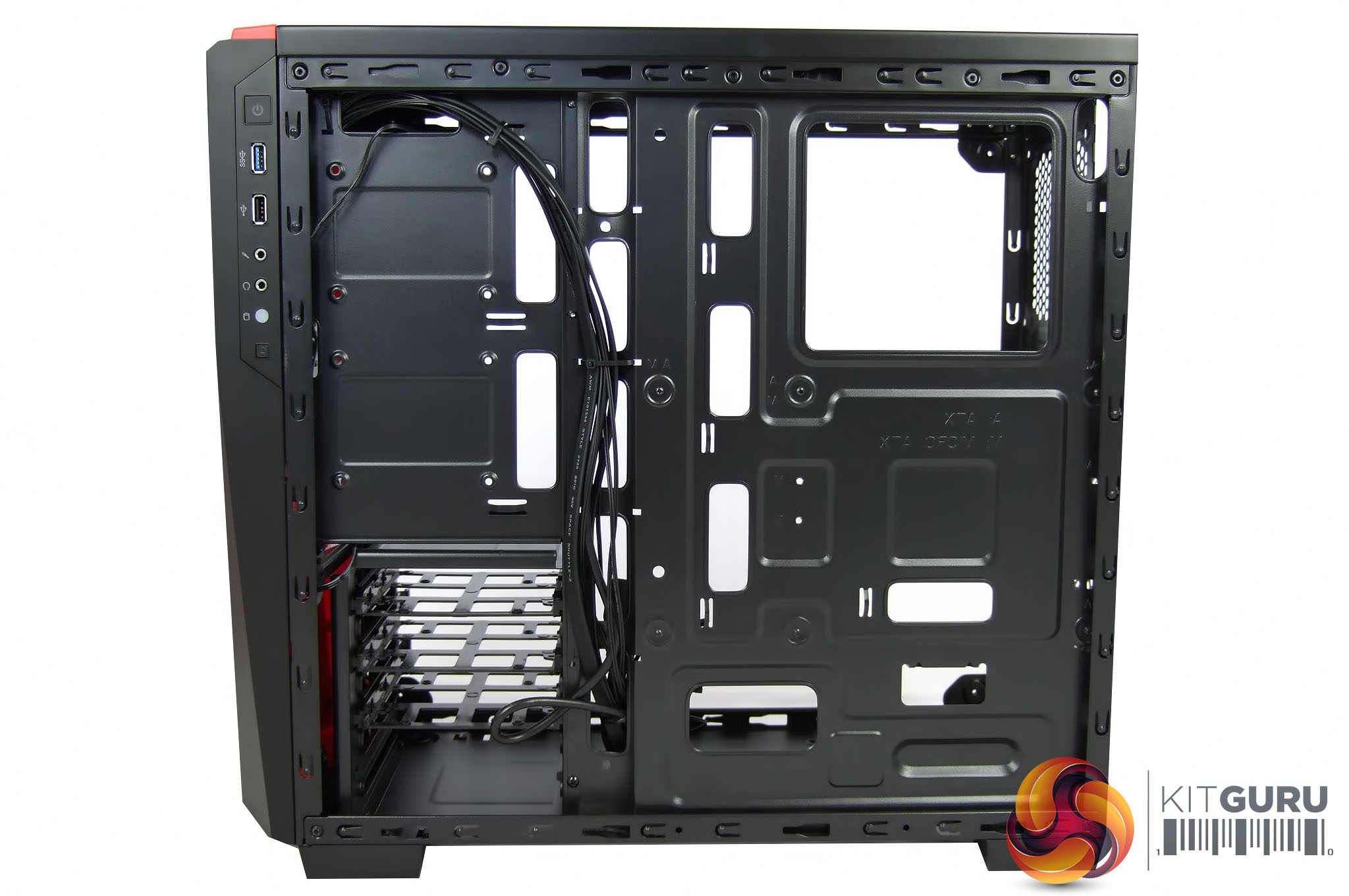
An inspection of the ‘back’ view allows a better look at cable routing options for the Carbide Spec-04 Tempered Glass as well as the rear of the motherboard tray. Everything is neatly compact, and there appear no major problems. My only minor concern here is the spacing of those 2.5” disk mounting areas right next to a cable routing cut-out. They might prove fiddly.
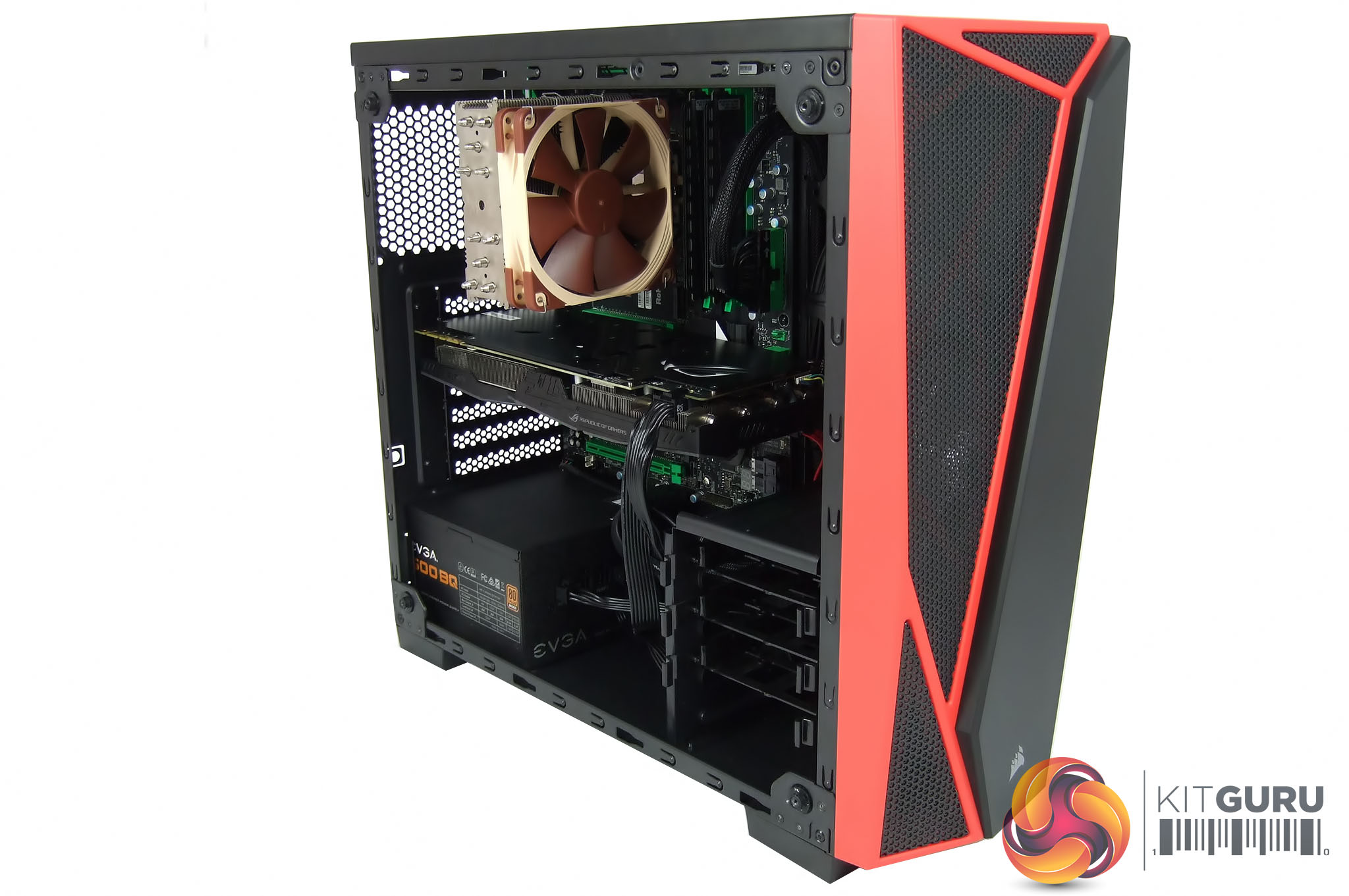
When it comes to installation in this case, there are one or two surmountable issues. Unfortunately, due to limited motherboard space – and as with the original Spec-04 – you have to think carefully about where to start with components. My original plan was a full ROG-themed build, but this fell flat with a Maximus IX Extreme board which wouldn’t fit.
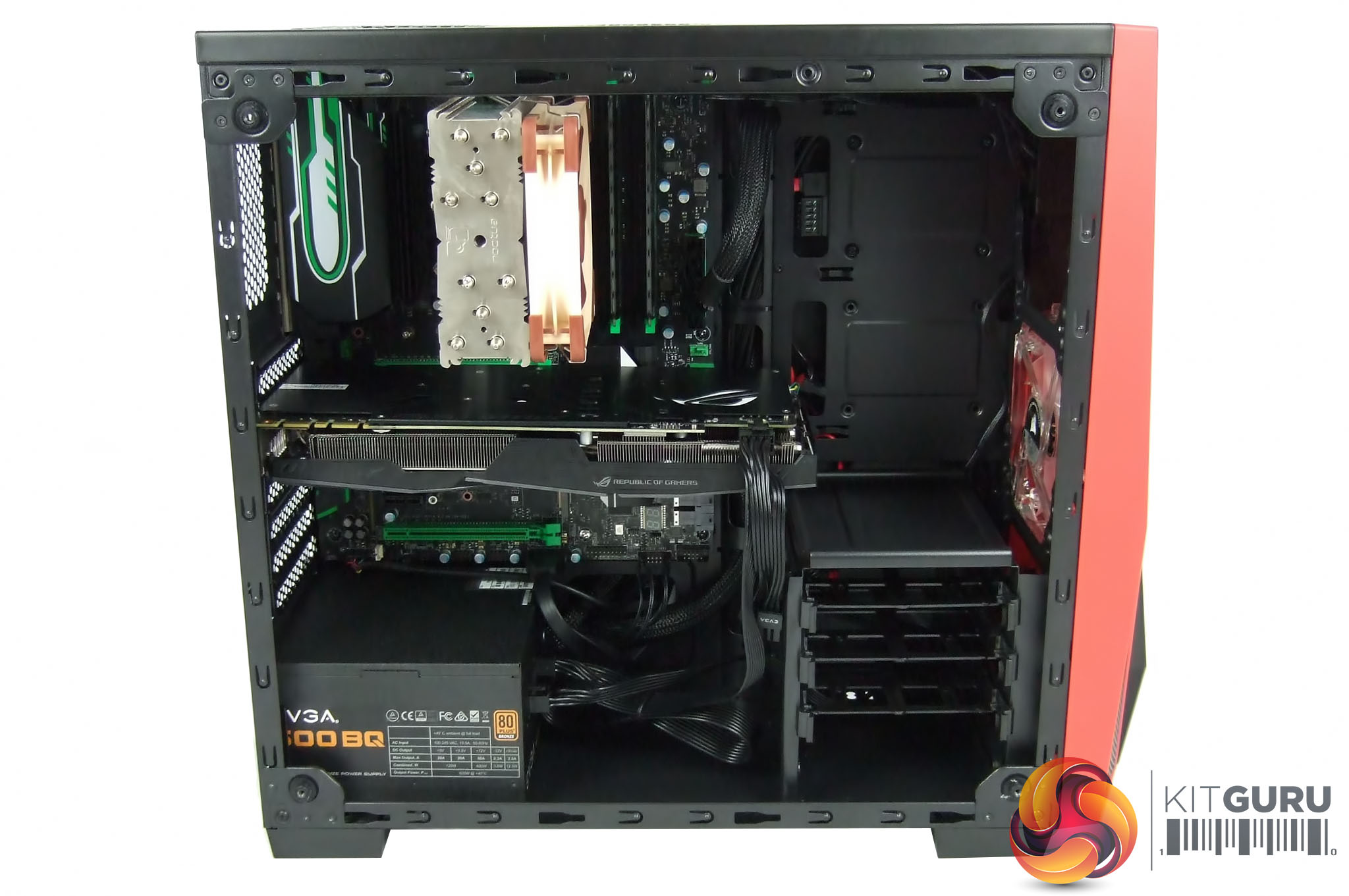
The Extreme’s chipset heatsink backplate conspired with the case’s limited motherboard tray area (the Extreme is pretty wide) to derail me. As such this case’s 272mm ATX limit is true, and switching things up I opted for a shorter motherboard. A further issue arose when I tried to fix the motherboard, then install the backplate for my CPU cooler.
Due to an oddity in the cut-out of the case’s motherboard tray, with the motherboard fixed the backplate for the cooler is impossible to fit. This means putting the back-plate in place before securing the motherboard down.
A final, more minor, but fiddly issue came (as expected) with the 2.5” drive installation. Having originally fixed my SSD on the bottom mount, I found its proximity to the SATA ports meant an excess of both power and SATA cable bundled up in one place. Moving the SSD to the highest mount eased the issue, although connecting both SATA and power cables to the SSD did prove fiddly as both cables have to pass through the routing cut-out and immediately flex to connect to the drive.
It’s a real lip-biter. Few builds are a completely smooth though and, but for the motherboard issue, fitting a system in this Spec-04 Tempered Glass rates as fairly painless.
Testing this case involved spending a good amount of time using it after the build for gaming and day-to-day tasks. Of course, stressing the GPU and CPU meant seeing what a chassis with a single fan could do.
Having checked CPU and GPU temps at idle, I stressed the system by using AIDA 64 Extreme. Leaving the program running for 15 minutes, I noted the temperatures at regular intervals and recorded the maximum values.
To testing the Corsair Carbide Spec-04 Tempered Glass, I installed the following components:
- Intel Core i7-7700K
- Supermicro C7Z270-CG Motherboard
- 2x 8GB Crucial Ballistix Tactical DDR4-3000
- ASUS ROG Strix GTX 1070
- Noctua NH-U12S CPU cooler
- EVGA 600 BQ Power Supply
- Samsung 850 Pro 256GB SSD
Thermal Dynamics
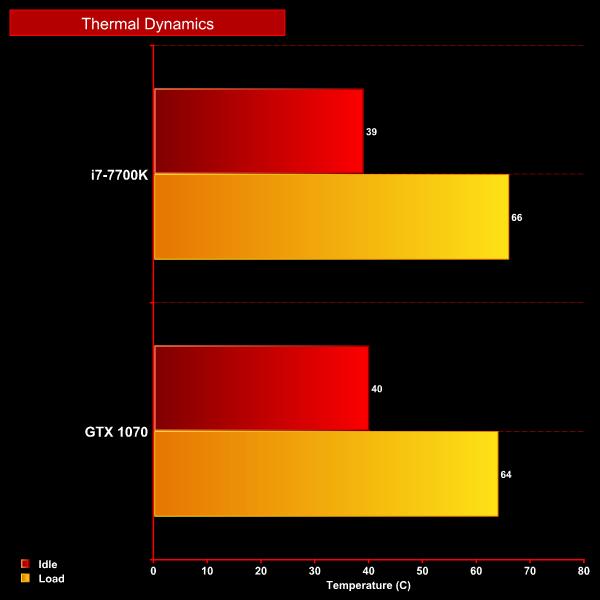
Just like the original Carbide Spec-04, the Tempered Glass model ships with a single front fan offering a minimal airflow situation. For my build in the case, a Noctua NH-U12S kept the 7700K more than cool enough at a stock of 4.2GHz.
The ROG Strix GTX 1070 is a triple-fan GPU design, so it too was kept cool as it’s pretty much self-sustaining on the thermal front.
With both facts in mind, and given the decent space for interior airflow at the case’s front, stable and effective cooling can be achieved in this case purely with a solid mix of components and sensible performance profiles. Ramping things up, additional fans would be an easy addition.
Acoustics
The Carbide Spec-04 Tempered Glass’s single fan made for a particularly quiet build, especially given the perforated front of the case. This was perhaps aided by the glass itself, which I’m confident contains the bulk of what minimal whirring is created. Overall though, the build was satisfyingly quiet. Quieter components will ensure things stay that way, even under load.
The Corsair Carbide Spec-04 is a budget case available around £60 in the UK as we go to publication today.
It’s not the cheapest, the most fully featured or perhaps most attractive of the budget cases available, but it’s a good mix of the best.
Given that Corsair is working with a known entity, augmenting an already solid and engaging case with tempered glass was a strong move. It adds a little bit of extra style to proceedings, and proves that even budget cases can showcase a smart build well. Owners can now better admire system interiors.
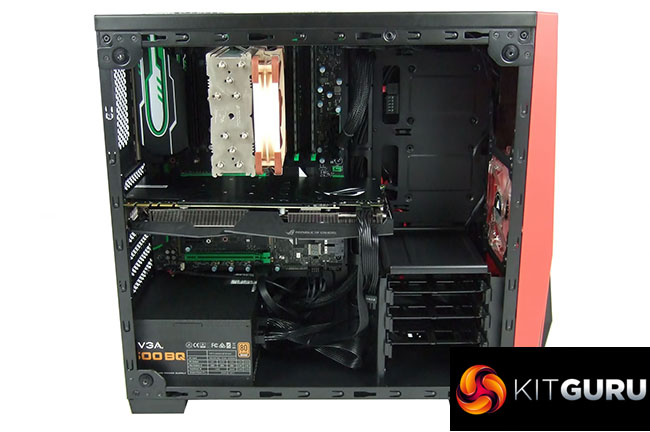
Other positives are the same for the original Spec-04. It catches the eye and is largely a case which is easy to work with, build in and use. But for limited ATX motherboard space, an oddity in backplate alignment and some fiddly-ness with 2.5” drives, installing components isn’t too taxing.
More importantly, installations are worth it in the Carbide Spec-04 Tempered Glass because you end up with a system which looks great (front and side), and can be further lit and cooling boosted with RGB and fan configurations.
Further, with its added stylish side panel, it feels as though more is possible with this case. Yes space is limited, but entry, mid-range or more powerful systems are possible with a few canny buys and a bit of prior consideration. We've found the Spec-04 a flexible and supportive case in the past, and here we have a case on the same level with some added panache.
Discuss on our Facebook page over HERE.
Pros
- Tempered glass side panel.
- Engaging design.
- Strong fan/expansion options.
- Sensible routing options.
- Well-positioned I/O.
Cons
- Maximum 272mm ATX motherboard width.
- Odd backplate cut-out alignment.
KitGuru says: This case proves budget options can look good and support strong, engaging, builds. Corsair deserves praise for the Spec-04 Tempered Glass, adding value to an already solid chassis which feels further reaching than the higher price-tag.

Better options then Corsair on market, for the price.